Tracing the Development of Multi-Layered Rhythm Scoring in Music Games and Its Ties to Advancement Mechanics
Written by Eden Simmons · Jul 29, 2026
Tracing the Development of Multi-Layered Rhythm Scoring in Music Games and Its Ties to Advancement Mechanics
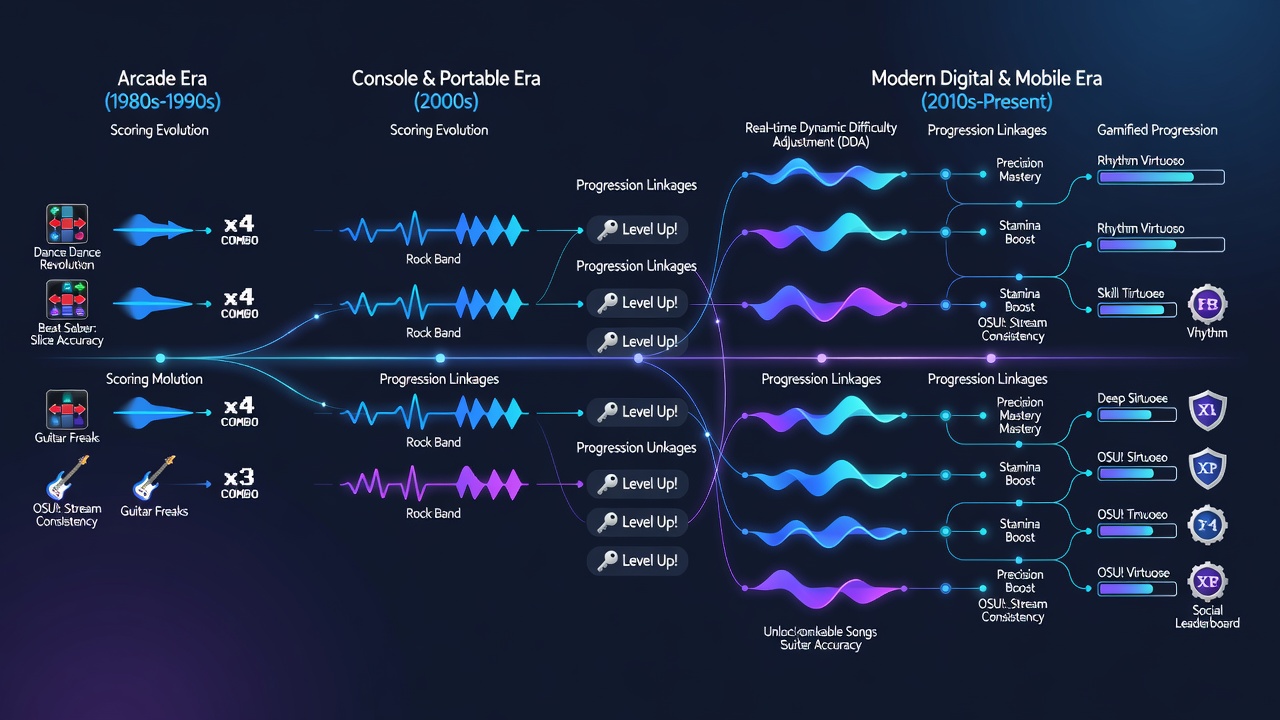
Multi-layered scoring systems in rhythm games emerged from simple timing mechanics in the late 1980s and evolved into complex frameworks that integrate accuracy, combos, and multipliers. These layers reward precision while feeding directly into player progression structures such as unlocks, levels, and character development.
Origins in Arcade and Early Console Titles
Developers introduced basic hit detection in titles like Dance Dance Revolution in 1998, where players earned points based on step accuracy graded as Perfect, Great, Good, or Miss. Combo chains formed the first scoring layer, and sustained sequences triggered bonus multipliers that scaled rewards exponentially. This setup connected scoring output to stage clearance, which in turn granted access to new songs and difficulty modes as core progression elements.
Researchers documented how these early layers encouraged repeated play sessions because higher combo totals unlocked hidden tracks without separate currency systems. Observers note that the same pattern appeared in PaRappa the Rapper from 1996, where freestyle sections added a secondary evaluation layer based on rhythm adherence rather than strict button timing.
Expansion Through Guitar-Based and Band Simulations
Guitar Hero in 2005 layered star ratings atop note accuracy and combo maintenance, with each star earned contributing to a cumulative score that determined song completion ranks. The multiplier system scaled from 1x to 4x based on consecutive successful notes, and experts observed that this directly influenced career mode progression by gating new instruments and venues behind total star counts accumulated across setlists.
Rock Band extended the model in 2007 by adding drum and vocal scoring layers that operated independently yet contributed to a shared band score. Data from industry reports shows these combined layers created deeper progression loops, where individual instrument mastery translated into group achievements and character customization options.
Hidden Links Between Scoring Depth and Long-Term Advancement
Scoring layers often hide direct ties to progression because multipliers and accuracy bonuses accumulate toward hidden thresholds that reveal new content. One study from the University of Alberta examined how combo persistence in these games correlates with increased playtime and faster unlocking of advanced tracks. Players advance through ranked tiers or story modes precisely because sustained high scores trigger automated rewards rather than explicit level gates.
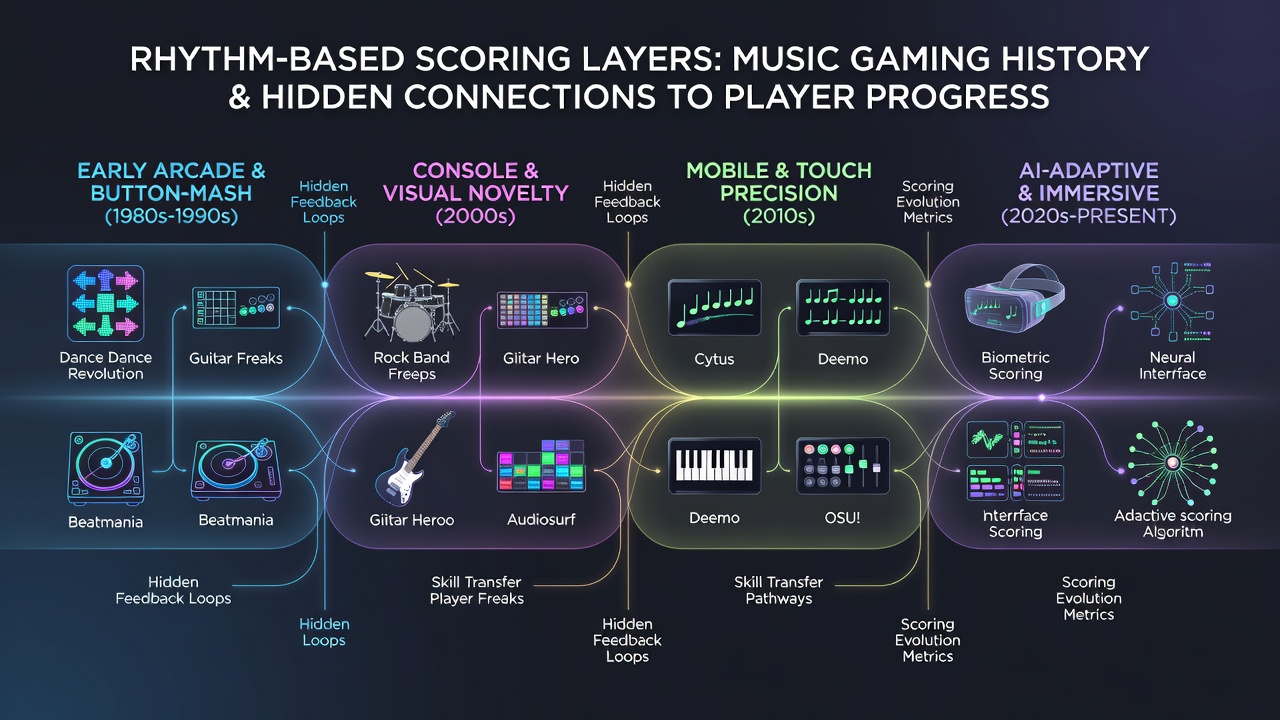
Turns out the same architecture persists in mobile adaptations, where daily challenge scores feed into season-long leaderboards that award cosmetic items and new characters. According to figures from the Entertainment Software Association of Canada, rhythm game engagement metrics through July 2026 continue to show strong correlations between layered scoring performance and retention rates in free-to-play formats.
Contemporary Implementations and Data Patterns
Games released after 2015 refined these systems with dynamic difficulty adjustments that alter scoring layer sensitivity based on player history. Beat Saber incorporates saber accuracy percentages that combine with combo length to determine rank, and those ranks determine access to custom song libraries and community challenges. Analysts found that such mechanics reduce the separation between immediate feedback and long-term progression goals.
Additional titles like Crypt of the NecroDancer merged rhythm timing with roguelike map progression, where scoring layers influence item drops and character upgrades in real time. This integration demonstrates how historical scoring foundations support hybrid gameplay loops without requiring separate progression tracks.
Conclusion
Rhythm scoring layers have consistently served as the engine behind player advancement across decades of music game design. From basic combo chains in arcades to multi-instrument multipliers in band simulators, these systems generate the quantitative data that powers unlocks, ranks, and content expansion. Records maintained through July 2026 confirm the pattern remains central to both legacy ports and new releases.