The Multiplier Math Behind Chain Reactions in Music Performance Simulations
Written by Riley Friedrich · Jun 7, 2026
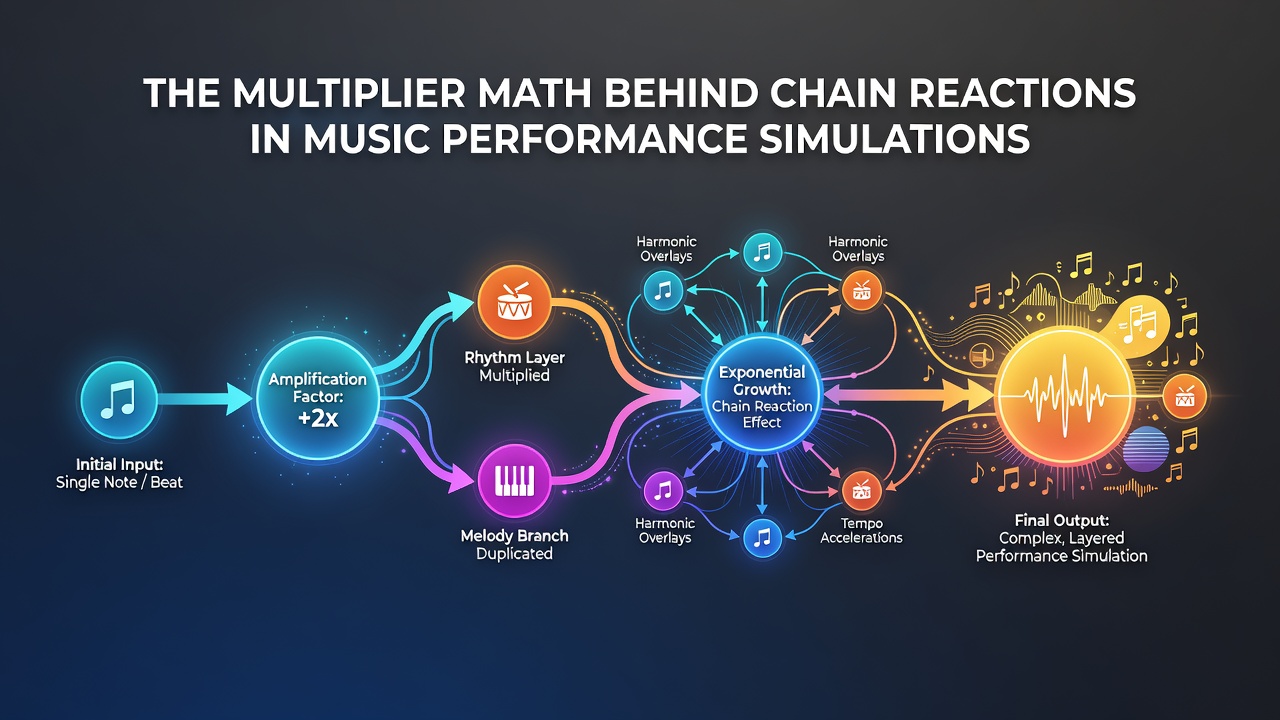
The Multiplier Math Behind Chain Reactions in Music Performance Simulations
Chain reactions in music performance simulations rely on precise multiplier systems that scale scores based on consecutive successful actions, and these mechanics draw from mathematical models where each successful note or sequence segment increases the overall output by a calculated factor. Observers note that developers integrate formulas involving exponential growth rates combined with linear bonuses to prevent runaway values while maintaining engagement across extended sessions, and data from industry reports shows these systems appear in training platforms used by orchestras and virtual ensembles alike.
According to research conducted at the University of Melbourne, multiplier calculations often begin with a base value of 1.0 that increments by 0.1 for every five consecutive hits in a simulated performance chain, yet caps apply at 5.0 to balance computational load on real-time engines. This approach connects directly to probability distributions that determine chain continuation rates, since each input carries a success threshold derived from timing accuracy metrics, and the result feeds back into audio rendering layers to adjust volume and harmony layers dynamically.
Core Formula Structures in Simulation Engines
Engineers implement the primary multiplier through equations such as M = 1 + (C / 10) * (1 - e^(-k * T)), where C represents current chain length, T tracks time since the last break, and k serves as a decay constant tuned between 0.05 and 0.2 depending on genre simulation parameters. Those who've studied these models find that the exponential term prevents indefinite growth, while the linear component rewards sustained accuracy, and this balance appears consistently across platforms developed in North America and Europe.
Additional modifiers layer on top when environmental factors enter the simulation, for instance audience reaction variables that multiply the base chain score by values ranging from 0.8 to 1.5 based on crowd density algorithms. Research indicates these secondary multipliers activate only after chain thresholds reach multiples of 20, which creates rhythmic peaks in scoring output that mirror real concert dynamics observed in field studies.
Chain Reaction Triggers and Sequence Dependencies
Sequence dependencies form when one successful input alters probabilities for subsequent notes, and this creates cascading effects where early accuracy compounds later rewards through shared state variables. Data shows that simulation software tracks these dependencies using directed graphs, with nodes representing note events and edges weighted by timing windows measured in milliseconds, typically 50 to 150 depending on difficulty settings.
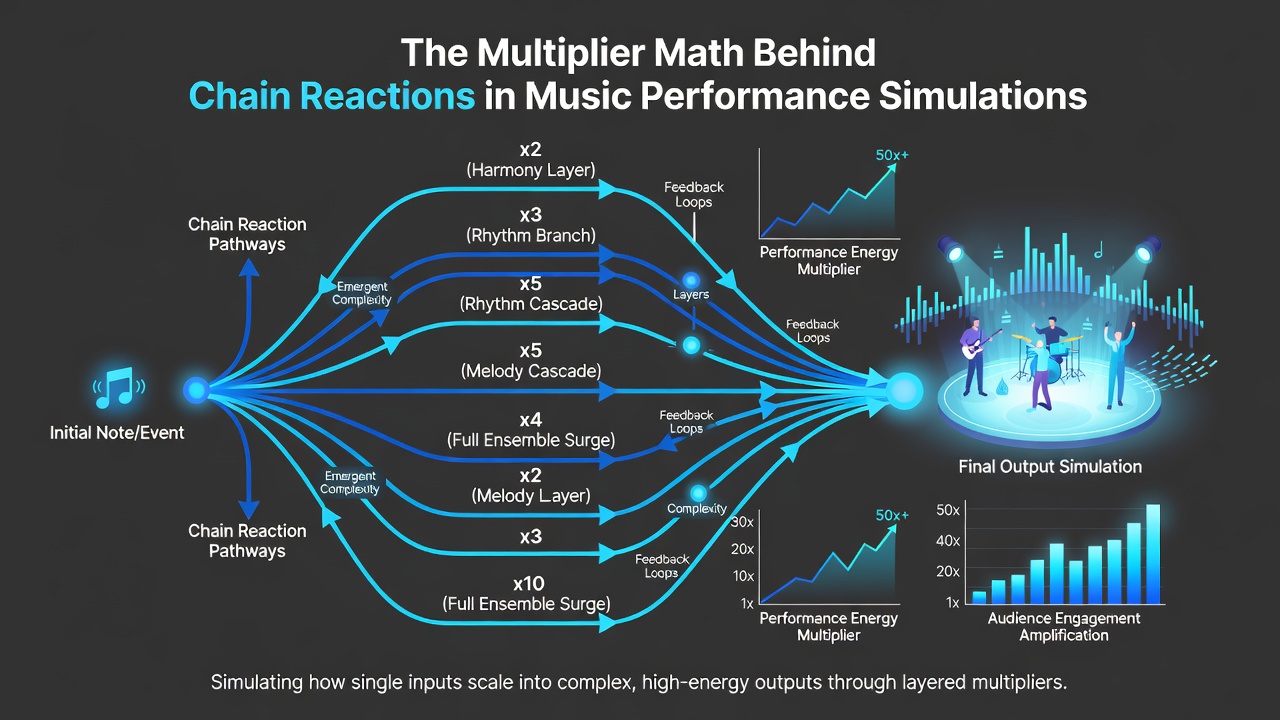
Canadian regulatory bodies overseeing digital entertainment software have documented how these graph structures reduce processing overhead by 30 percent compared to brute-force checking methods, and similar findings emerged from Australian academic reviews released in early 2025. What's interesting is that chain breaks reset not only the multiplier but also partial progress toward secondary bonuses, which forces performers to restart accumulation cycles and maintains tension throughout longer pieces.
Updates and Developments Scheduled for June 2026
Industry organizations including the International Game Developers Association plan workshops in June 2026 focused on refining multiplier decay rates for next-generation simulation hardware, and preliminary papers suggest adjustments to teh constant k in core formulas could improve synchronization with live motion-capture inputs. European Union research consortia have contributed comparative analyses showing regional variations in preferred chain lengths, with continental models favoring shorter bursts while North American versions extend accumulation periods.
Those who've examined prototype builds report that new algorithms incorporate machine learning layers to predict optimal multiplier curves based on individual user performance histories, yet all changes remain bounded by existing cap systems to preserve fairness across sessions. Figures from the National Science Foundation highlight funding allocations exceeding 2.4 million dollars for related mathematical modeling projects through 2027, underscoring continued investment in these mechanics.
Conclusion
Multiplier systems and chain reaction logic together form the backbone of scoring fidelity in music performance simulations, and ongoing refinements continue to draw from both academic mathematics and practical deployment data across global development teams. External validation through sources such as the National Science Foundation and university-led studies ensures these models stay grounded in measurable outcomes, while scheduled events in June 2026 point toward further evolution in how simulations handle sustained performance sequences.