Synchronization Secrets: How Timing Mechanics Unite Music Mixing and Physics Puzzles in Interactive Entertainment
Written by Sam Wagner · Jul 15, 2026
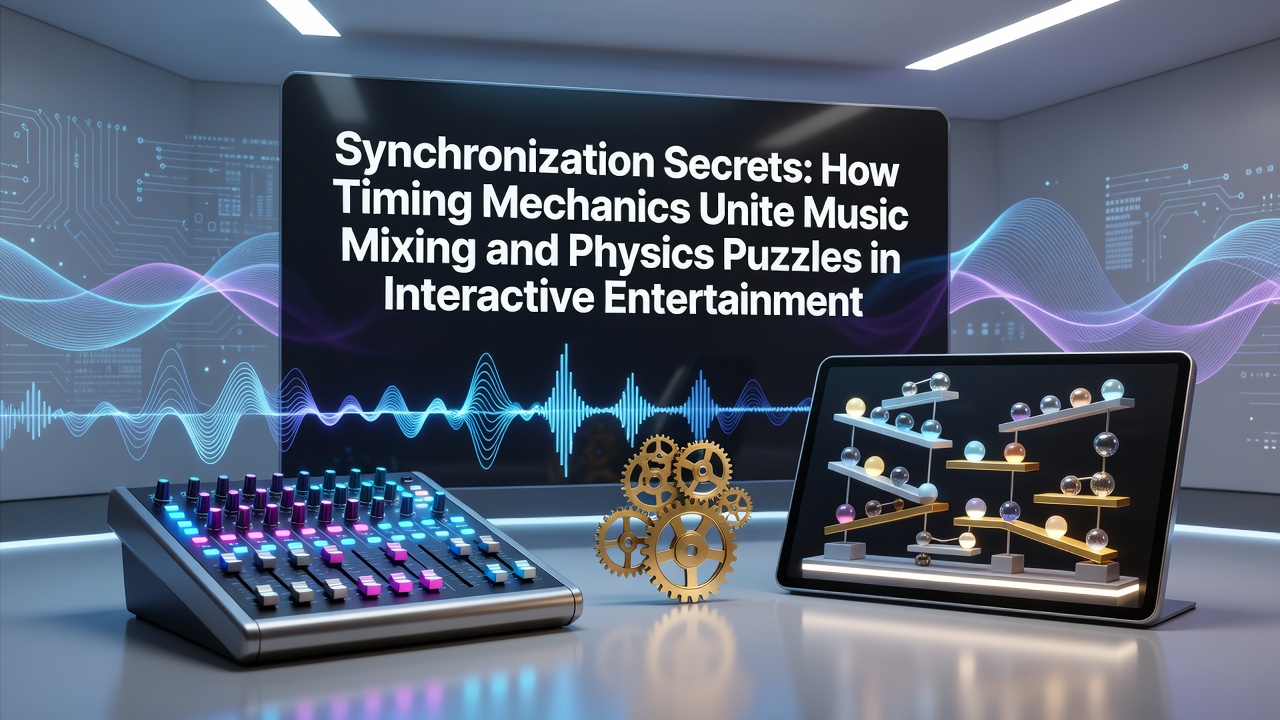
Synchronization Secrets: How Timing Mechanics Unite Music Mixing and Physics Puzzles in Interactive Entertainment
Timing mechanics form the backbone of many interactive entertainment experiences where music mixing and physics puzzles intersect through precise synchronization requirements that demand player coordination across auditory and spatial elements. Developers implement these systems to create layered challenges that respond dynamically to user inputs while maintaining consistent internal clocks across game states and audio tracks. Research from institutions like the Massachusetts Institute of Technology has documented how rhythmic patterns in audio layers align with object trajectories and collision detections to produce unified gameplay loops.
Core Principles of Timing in Music Mixing Systems
Music mixing applications within games rely on beat detection algorithms that parse tempo data in real time and map those metrics onto player actions such as crossfading tracks or triggering samples at exact intervals. Studies indicate that latency compensation techniques adjust for hardware variations so that input registration matches the visual and auditory feedback loops without introducing perceptible delays. Observers note that successful implementations often incorporate variable BPM sections where the engine recalibrates physics interactions to prevent desynchronization between sound events and on-screen animations.
Industry reports from the Entertainment Software Association reveal that rhythm-based titles released through 2025 increasingly integrate adaptive mixing tools that allow players to manipulate multiple audio stems while the underlying physics engine continues to simulate environmental responses at fixed tick rates. Data shows these mechanics reward accuracy within narrow windows measured in milliseconds and scale difficulty by narrowing those windows or adding layered constraints such as overlapping beat patterns from separate tracks.
Timing Foundations in Physics Puzzle Design
Physics puzzle segments depend on synchronized object movement where gravity simulations, momentum transfers, and trigger activations must align with external cues to reach solutions. Developers calibrate these elements using deterministic update cycles that ensure identical outcomes across different hardware platforms when inputs arrive at consistent intervals. According to findings published by the Association for Computing Machinery, timing windows in puzzle sequences frequently incorporate auditory markers that cue players on optimal release points for actions like launching projectiles or activating switches.
Those who have analyzed puzzle construction note that collision resolution routines run in parallel with audio buffers so that a physics event triggered by a musical cue produces immediate and predictable results. Figures from game engine documentation indicate that sub-frame accuracy becomes essential when puzzles combine moving platforms with rhythmic audio loops because even minor drift can break the intended sequence and force restarts.
Convergence of Music and Physics Through Shared Synchronization
Games that merge these domains create environments where players adjust audio parameters to influence physical outcomes such as altering a track's tempo to change platform speeds or using beat drops to initiate chain reactions among objects. This integration requires a master clock that governs both the digital signal processor handling sound and the simulation thread managing rigid body dynamics. Experts have observed that middleware solutions coordinate these threads by broadcasting timestamped events that each subsystem interprets according to its own resolution needs.
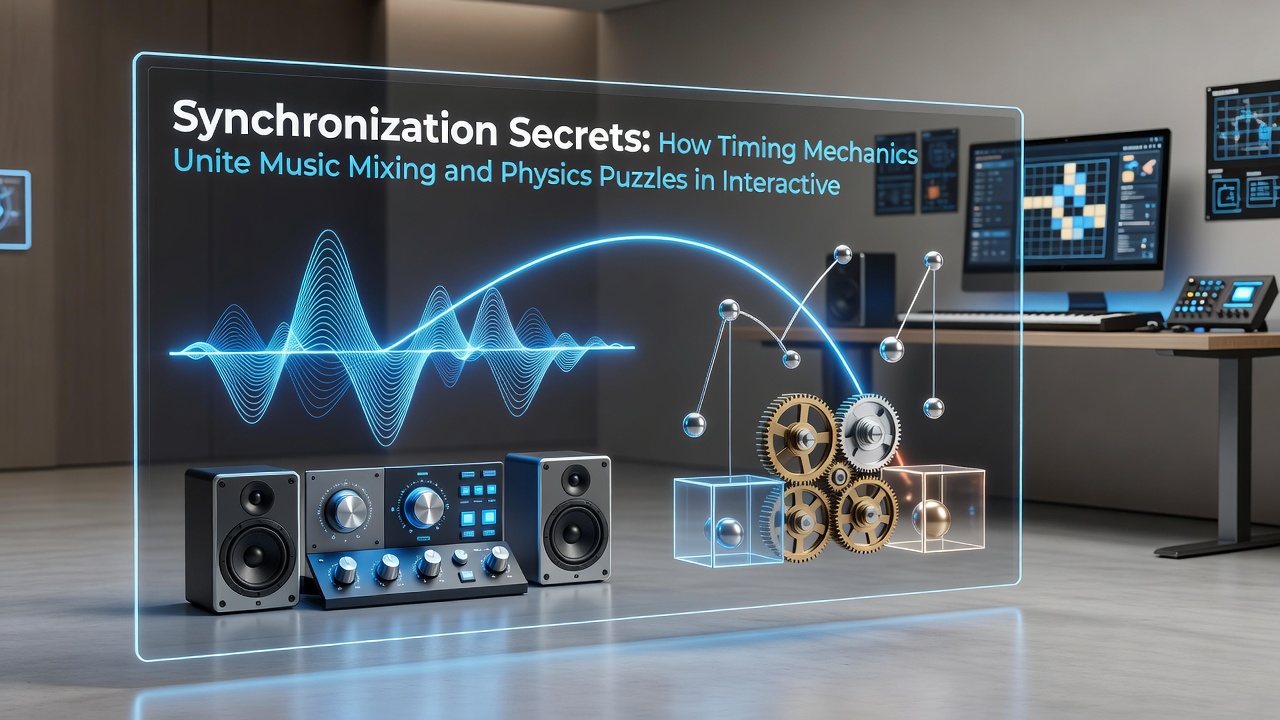
European research from the Fraunhofer Institute has examined how such unified timing layers reduce cognitive load by allowing players to transfer skills between auditory pattern recognition and spatial prediction tasks. The resulting mechanics often appear in titles where musical progression directly modulates environmental variables like gravity strength or friction coefficients and players must maintain beat accuracy to keep the simulation stable.
Implementation Patterns Observed in Contemporary Titles
Developers structure these combined systems around event-driven architectures where musical markers serve as triggers for physics state changes while player inputs simultaneously affect both audio output and object trajectories. Case studies from studios working with engines such as Unity and Unreal document the use of timeline assets that embed physics keyframes alongside audio cues to guarantee frame-accurate alignment. In July 2026 several independent releases demonstrated expanded support for user-generated content that lets creators define custom synchronization rules between custom soundtracks and puzzle geometry.
Additional patterns include multi-threaded audio rendering that runs ahead of the main physics update to precompute beat positions and feed them into the simulation as predictive data. This approach allows puzzles to react to music variations without introducing frame drops and maintains consistency when players import external tracks with fluctuating tempos.
Technical Challenges and Solutions in Unified Systems
One persistent challenge involves drift between audio sample clocks and physics simulation rates which developers address through periodic resynchronization routines that adjust object positions based on accumulated timing errors. Industry organizations such as the Interactive Software Federation of Europe have tracked how these corrections become more complex in multiplayer scenarios where network latency compounds local synchronization issues. Solutions frequently employ client-side prediction paired with server-authoritative timing beacons to keep all participants aligned.
Additional work focuses on variable rate physics that can scale update frequency in response to detected musical complexity without sacrificing determinism. Researchers continue to refine interpolation methods that smooth transitions between different tick rates while preserving the feel of precise rhythmic control.
Conclusion
Timing mechanics continue to serve as the connective tissue that allows music mixing adn physics puzzles to function as interdependent systems within interactive entertainment. Data from multiple technical studies confirms that shared synchronization frameworks improve both mechanical depth and player engagement across genres. As development tools evolve through 2026 and beyond, observers expect further refinement of these integrated approaches that treat audio and physics as parallel expressions of the same underlying temporal structure.