Studio Expansion Strategies in Management Simulations: Optimizing Hiring Decisions Across Growth Phases
Written by Eden Simmons · May 29, 2026
Studio Expansion Strategies in Management Simulations: Optimizing Hiring Decisions Across Growth Phases
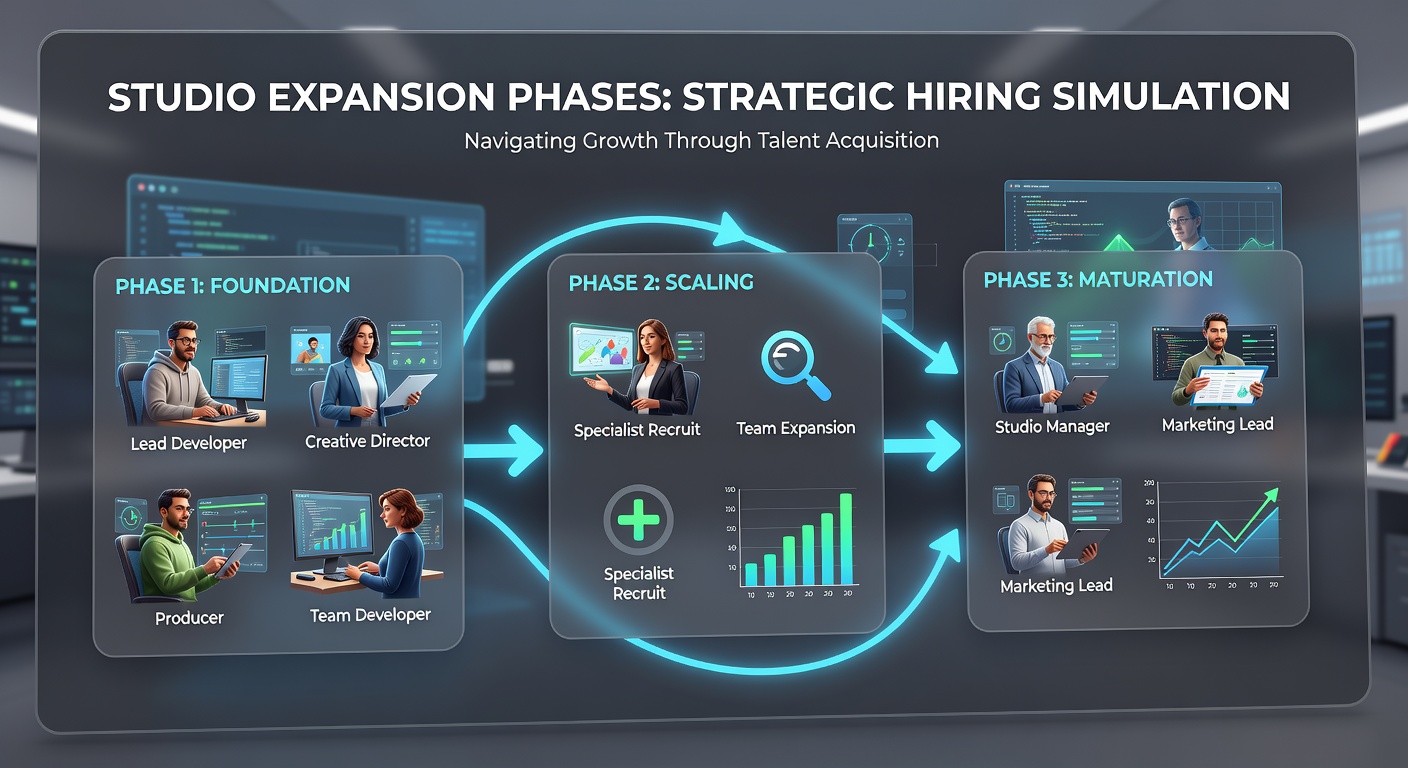
Management simulations place players in control of virtual studios where growth unfolds through distinct phases that demand careful attention to team composition and recruitment timing, and data from industry reports shows that successful navigation often hinges on aligning hires with specific milestones rather than rushing to fill roles. Observers note that early stages typically revolve around small core teams focused on foundational tasks such as prototyping and basic project management, while later stages introduce layers of specialization that require targeted additions to handle increased workload and complexity.
Initial Growth and Foundational Hiring Patterns
Research indicates that the opening phase of studio expansion in these simulations centers on establishing a versatile base crew capable of handling multiple duties simultaneously, and players frequently discover that hiring generalists first allows projects to advance without immediate bottlenecks. Those who've studied simulation mechanics know that adding a single versatile programmer or designer early on can support several concurrent tasks, whereas premature specialization often leads to idle resources and stalled progress. Evidence suggests that balancing roles like coding, art production, and quality assurance creates momentum, yet timing remains critical because overstaffing before revenue streams stabilize tends to strain budgets.
What's interesting is how simulations mirror real-world patterns documented in reports from the Entertainment Software Association, where smaller teams leverage broad skill sets to reach viability thresholds. And players often find that monitoring project completion rates provides clear signals for when to expand beyond the initial group, turning reactive hiring into a proactive strategy that sustains momentum through the first revenue cycles.
Mid-Phase Scaling and Role Specialization
Once basic operations stabilize, simulations shift toward mid-phase expansion where hiring choices pivot toward specialized positions that address emerging inefficiencies, and studies from European game development networks reveal that introducing dedicated roles in areas like sound design or marketing coordination accelerates output without disrupting existing workflows. Those managing virtual studios learn to assess workload distribution through in-game metrics, which highlight gaps that generalists can no longer cover efficiently.
But here's the thing: successful players integrate new hires gradually, pairing them with established team members to maintain productivity during onboarding periods, whereas abrupt additions frequently create temporary slowdowns as coordination adjusts. Data shows that focusing recruitment on high-impact areas such as engine optimization or narrative support yields measurable gains in project quality scores, and simulations reward this precision by unlocking advanced mechanics only after certain team thresholds are met.
Late-Stage Expansion and Leadership Integration
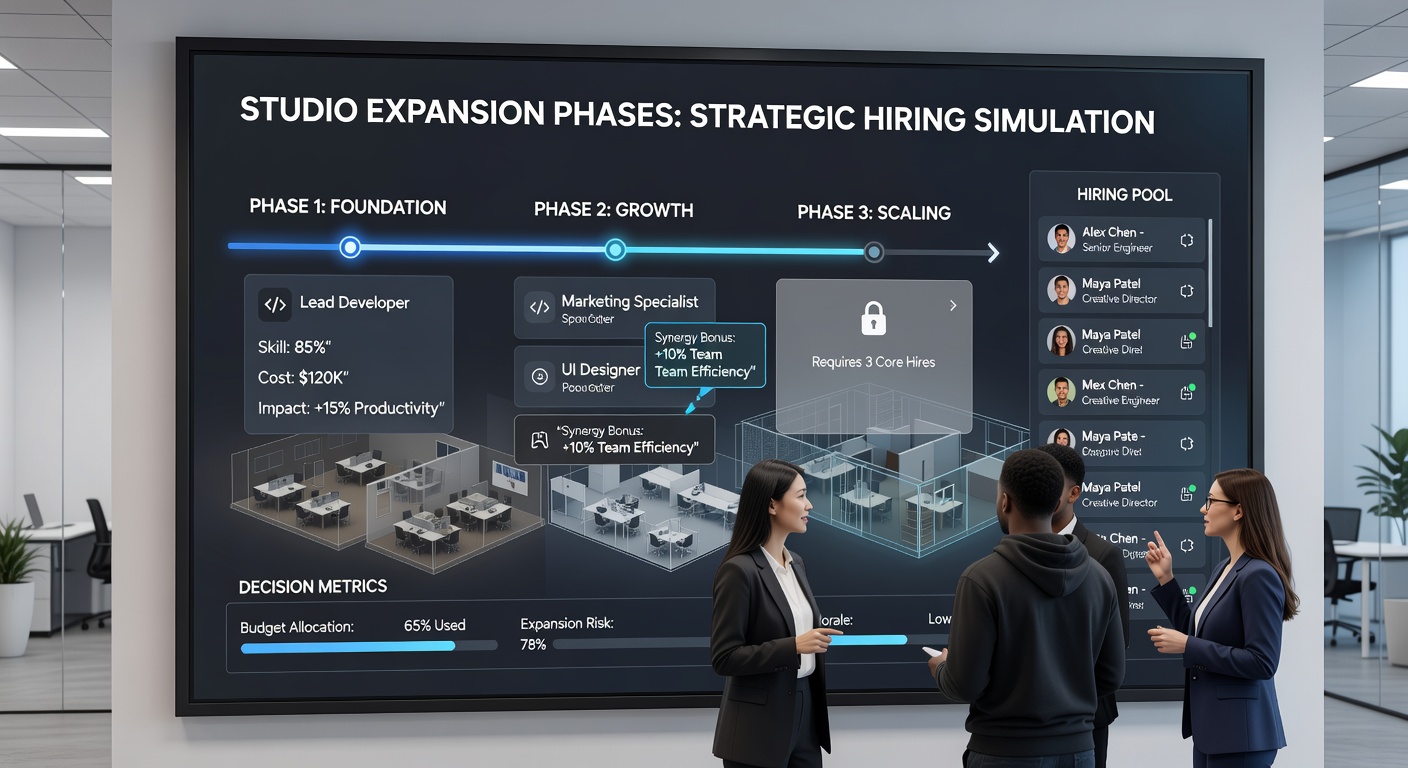
Advanced phases bring larger organizational structures into play, prompting recruitment of leadership and support roles that oversee departments rather than execute individual tasks, and academic analyses from Canadian research institutions confirm that these additions stabilize operations during rapid scaling. Observers note that simulations introduce executive positions such as creative directors or operations managers at points where team size exceeds initial projections, allowing players to delegate oversight and focus on strategic decisions.
Turns out that strategic hiring in this stage also involves anticipating future needs like international distribution support or live-service maintenance, and figures from industry associations indicate that studios investing in these areas early achieve higher long-term retention rates for virtual projects. Yet the process requires ongoing evaluation because misaligned hires at this level can inflate costs without corresponding benefits, prompting players to use simulation analytics for predictive planning.
Budgetary Considerations and Risk Mitigation
Financial modeling within management simulations ties hiring sequences directly to cash flow projections, and evidence from global gaming reports demonstrates that sequencing recruitment around milestone payments prevents liquidity issues during expansion windows. Players who monitor salary structures alongside productivity bonuses discover optimal windows for adding staff, particularly when simulations incorporate seasonal events or market fluctuations that affect revenue timing.
What's significant is how these mechanics encourage contingency planning, such as maintaining a reserve pool for contract workers during peak periods rather than committing to permanent hires immediately. Research shows that this approach reduces the frequency of forced downsizing events, which in turn preserves team morale metrics and project continuity across multiple titles.
Conclusion
Navigating studio expansion in management simulations ultimately depends on viewing hiring as a phased process synchronized with project demands and financial health, and comprehensive data from varied sources continues to underscore the value of deliberate recruitment strategies. As simulations evolve with updates expected through May 2026, players gain access to refined tools that further emphasize predictive analytics for team building. Those engaging with these systems consistently find that measured growth through strategic choices sustains operations more effectively than accelerated scaling alone.