Staff Advancement Pathways in Tycoon-Style Game Development Simulations
Written by Riley Friedrich · Jun 14, 2026
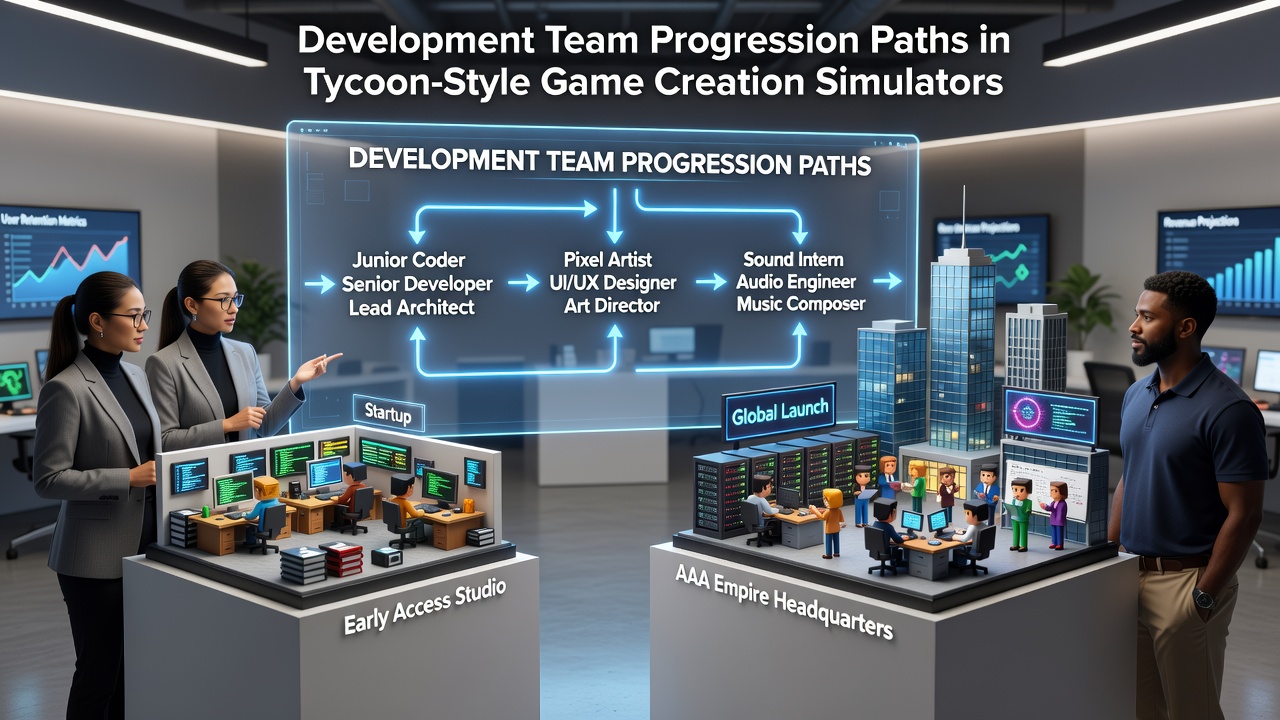
Staff Advancement Pathways in Tycoon-Style Game Development Simulations
Tycoon-style game creation simulators model the operations of virtual studios where teams advance through structured systems that reward consistent performance and targeted training, and these mechanics draw directly from observed industry practices in software development workflows. Observers note that entry-level roles typically begin with junior positions in areas such as programming, art, or design, after which accumulated experience points unlock higher tiers that expand both individual capabilities and overall project efficiency.
Core Mechanics of Team Progression
Progression follows a tiered system in which staff members gain experience from completing assigned tasks, while repeated exposure to specific genres or platforms accelerates specialization; data from multiple simulation models indicates that balanced task distribution prevents bottlenecks and supports smoother advancement across departments. Researchers have documented how attributes like creativity, technical skill, and speed increase incrementally, often reaching plateaus that require mentorship or workshop investments to overcome.
Specialization branches open once core levels are achieved, allowing programmers to shift toward engine optimization or artificial intelligence modules, whereas artists may focus on animation pipelines or user interface elements, and these choices influence long-term studio output because advanced roles contribute higher multipliers to project quality metrics. Studies from academic sources on simulation-based training confirm that such branching systems mirror real-world career lattices in the interactive entertainment sector.
Factors Influencing Advancement Rates
Project success rates, employee morale indicators, and resource allocation all shape how quickly teams progress, since successful releases generate bonuses that fund additional training sessions or equipment upgrades; figures from industry analyses reveal that studios maintaining steady release schedules achieve faster collective level gains compared to those with irregular output patterns. External events, including platform shifts or genre trends, further modulate these rates by introducing new skill requirements that demand targeted upskilling.
One documented pattern shows that cross-training across disciplines shortens the time needed for mid-level promotions, because versatile employees reduce dependency on narrow specialists during crunch periods. Government reports on digital workforce development, such as those issued by Innovation, Science and Economic Development Canada, highlight similar dynamics in technology sectors where diversified skill sets correlate with accelerated career mobility.
Specialization and Leadership Tracks
Leadership pathways emerge after staff reach senior thresholds, at which point individuals transition into producer or department head roles that emphasize coordination over hands-on creation; these transitions carry increased responsibility for hiring decisions and deadline management, while also unlocking studio-wide bonuses when managed effectively. Observers have tracked how leadership tracks require investment in soft-skill modules that are absent from early-stage progression trees.
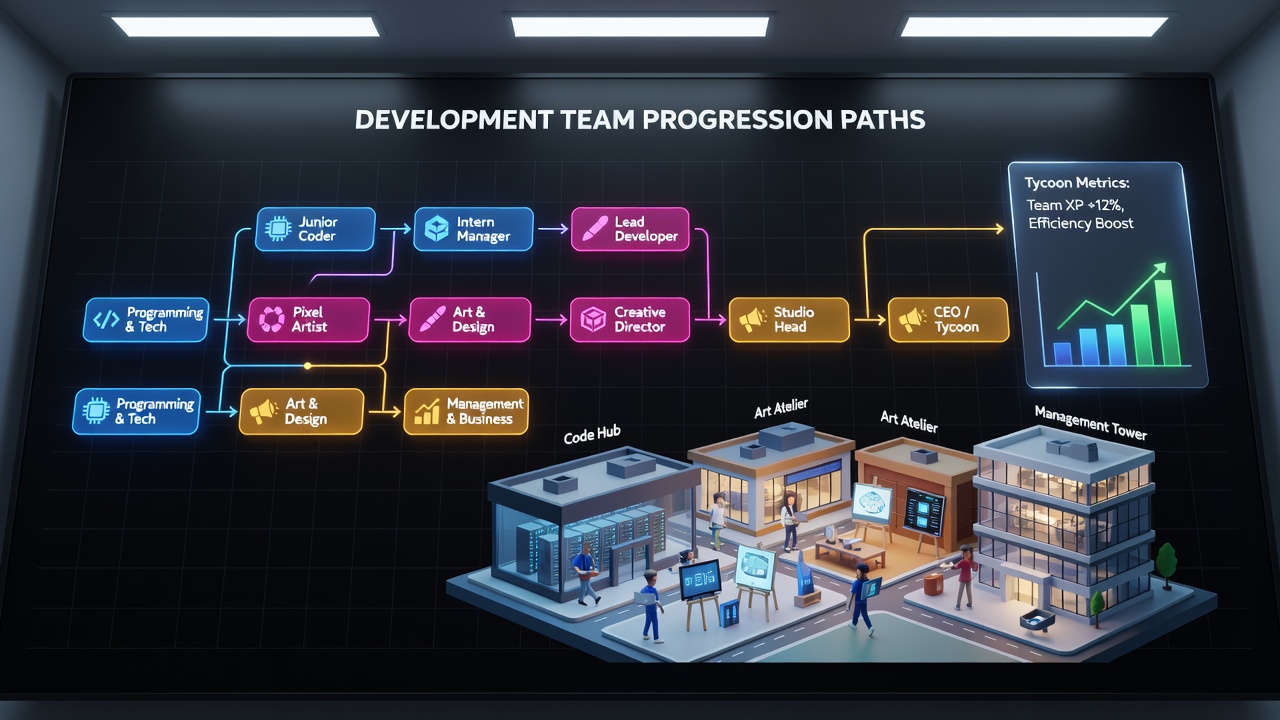
Retention mechanics play an equally important part because high-performing staff may receive competing offers from rival studios, forcing players to balance salary adjustments against training budgets; evidence from simulation case studies demonstrates that proactive retention strategies preserve institutional knowledge and prevent regression in overall team competence.
Integration with Broader Studio Systems
Progression paths intersect with office expansion, technology acquisition, and marketing campaigns, since larger facilities accommodate bigger teams while advanced hardware unlocks tasks that yield greater experience rewards. Reports compiled by the Interactive Software Federation of Europe indicate that integrated systems like these encourage holistic planning rather than isolated staff development.
June 2026 saw several simulation platforms release updates that introduced dynamic mentorship networks, allowing senior staff to accelerate junior advancement through paired projects, and these changes aligned with ongoing shifts toward remote collaboration tools observed across the broader software industry. Players managing multiple studios simultaneously benefit from shared progression data that carries over between titles, reducing redundant training investments.
Conclusion
Development team progression in these simulators ultimately reflects layered decision trees where short-term task choices aggregate into long-term organizational capability, and continued refinement of these systems continues to draw from empirical workforce data across global technology sectors.