Score Chaining and Song Selection Mastery in Rhythm Action Titles
Written by Olivia Washington · Aug 21, 2026
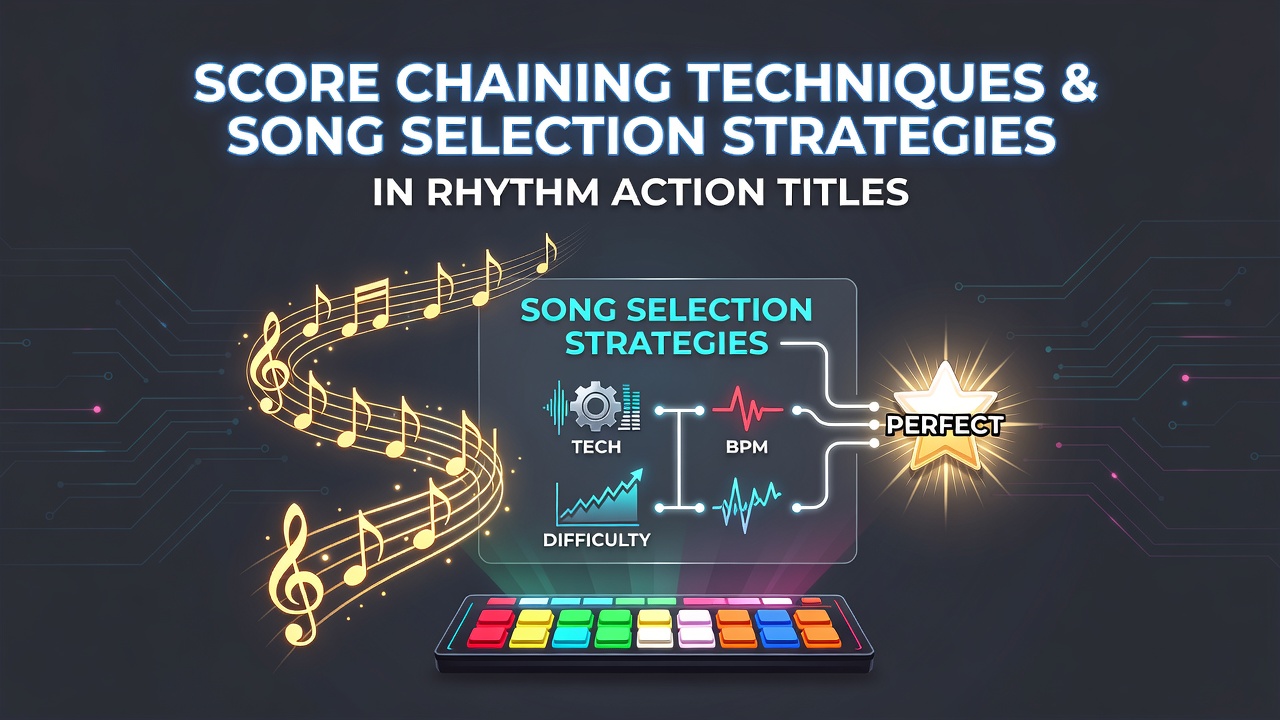
Score Chaining and Song Selection Mastery in Rhythm Action Titles
Score chaining techniques in rhythm action titles rely on maintaining unbroken sequences of accurate inputs that trigger escalating multipliers, and players achieve this through consistent timing alignment with on-screen cues across multiple game modes. Research from the Entertainment Software Association indicates that multiplier systems in these titles reward sustained performance streaks, which can increase point totals by factors of four or higher when chains extend beyond standard thresholds. Those who study player data note that chaining often begins with basic note patterns before progressing to complex sequences involving simultaneous inputs and rapid directional changes.
Core Mechanics Behind Score Chains
Mechanics vary by title yet share common foundations where each successful hit adds to a combo counter while misses reset progress and forfeit accumulated bonuses, and this structure encourages players to prioritize accuracy over speed in early sections of a track. Observers note that visual and audio feedback systems help maintain chain integrity by highlighting upcoming notes with increasing intensity as multipliers climb, which allows for better anticipation during dense passages. Data shows that games released in recent years incorporate adaptive difficulty adjustments that scale note density based on detected performance levels, thereby supporting longer chains for developing players while challenging experts with irregular rhythms.
Timing windows for successful hits typically span 50 to 100 milliseconds depending on difficulty settings, and extending chains requires players to adjust for latency variations in both console hardware and peripheral controllers. Studies reveal that practice modes with slowed playback speeds enable systematic improvement in chain duration, as users isolate problematic note clusters and repeat them until input precision improves. What's interesting is how certain titles introduce temporary power-ups that temporarily widen timing windows, which can preserve chains during transitions between song sections.
Practical Approaches to Extending Chains
Players build longer chains by starting with mid-tempo tracks that feature predictable note spacing, then gradually incorporate faster selections once baseline consistency develops, and this progression method appears in multiple community guides. Advanced techniques include holding sustained notes while preparing for upcoming rapid taps, which demands divided attention across input types without breaking the active multiplier. Researchers have observed that peripheral hardware with reduced input lag contributes to chain stability, particularly in competitive settings where fractions of a second determine final rankings.
Strategic Song Selection Methods
Song selection strategies center on matching track characteristics to individual skill profiles, with players often reviewing note density charts before committing to a performance session. Evidence suggests that selecting songs with gradual difficulty ramps allows for chain establishment early in the track, while reserving complex sections for when multipliers have already reached higher levels. Those who've analyzed leaderboards find that optimal pairings frequently combine shorter tracks with high note density for multiplier farming alongside longer endurance pieces that test sustained accuracy.
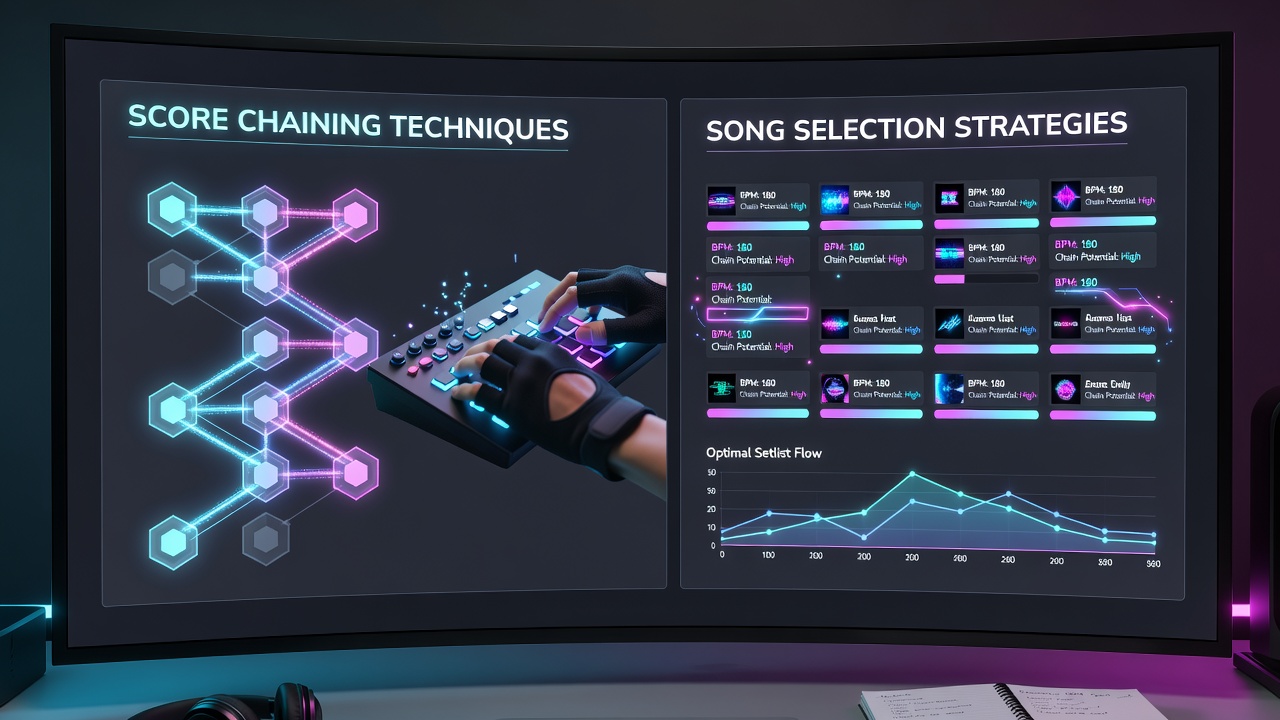
August 2026 updates to several popular rhythm platforms introduced new song libraries that feature algorithmic recommendations based on prior performance metrics, which helps users identify tracks likely to support extended chains. Selection also accounts for genre-specific patterns, as electronic tracks often emphasize rapid alternating inputs while rock-oriented selections favor sustained holds and directional flicks. Industry reports highlight that cross-title song import features have expanded available options, allowing players to transfer successful strategies across different rhythm action environments.
Integration of Chaining with Multiplayer and Competitive Play
Multiplayer modes introduce additional variables where opponents can disrupt chain attempts through shared screen effects or competitive scoring systems, and successful players adapt by selecting tracks that minimize such interference opportunities. Data from competitive events indicates that song choices in tournaments frequently favor mid-length pieces that balance chain potential with risk of disruption, thereby optimizing overall point accumulation. Those monitoring tournament results observe that preparation involves studying opponent tendencies alongside personal chain-building routines to anticipate counter-strategies.
Training regimens documented in player communities emphasize repeated full runs of selected tracks without pause, which builds muscle memory for maintaining chains under fatigue conditions that arise during extended sessions. External factors such as controller calibration and room lighting further influence input reliability, prompting players to standardize their setup environments before attempting record attempts.
Conclusion
Score chaining and song selection in rhythm action titles operate through interconnected systems of timing precision, multiplier progression, and strategic track matching that reward consistent practice and informed choices. Available data continues to evolve with new releases and platform updates, providing fresh opportunities for players to refine these approaches across expanding content libraries.