Sackboy's Hidden Layering Tricks Reshape Community Level Design Approaches
Written by Olivia Washington · Aug 26, 2026
Sackboy's Hidden Layering Tricks Reshape Community Level Design Approaches
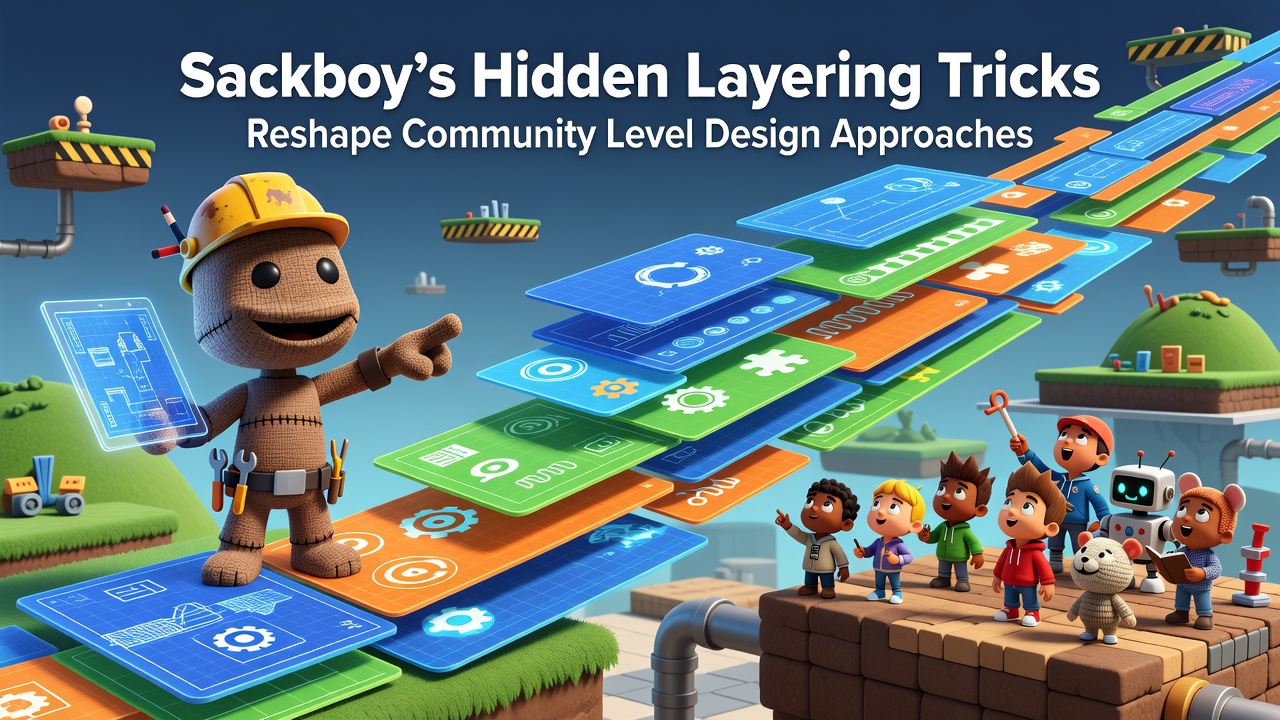
Community creators working with Sackboy in LittleBigPlanet titles have developed advanced layering methods that extend beyond basic platform placement, and these approaches continue to influence how levels incorporate depth and visual complexity. The core mechanics allow objects to occupy multiple planes along the z-axis, which enables precise control over foreground, midground, and background elements while maintaining smooth gameplay flow.
Core Mechanics Behind Sackboy Layer Placement
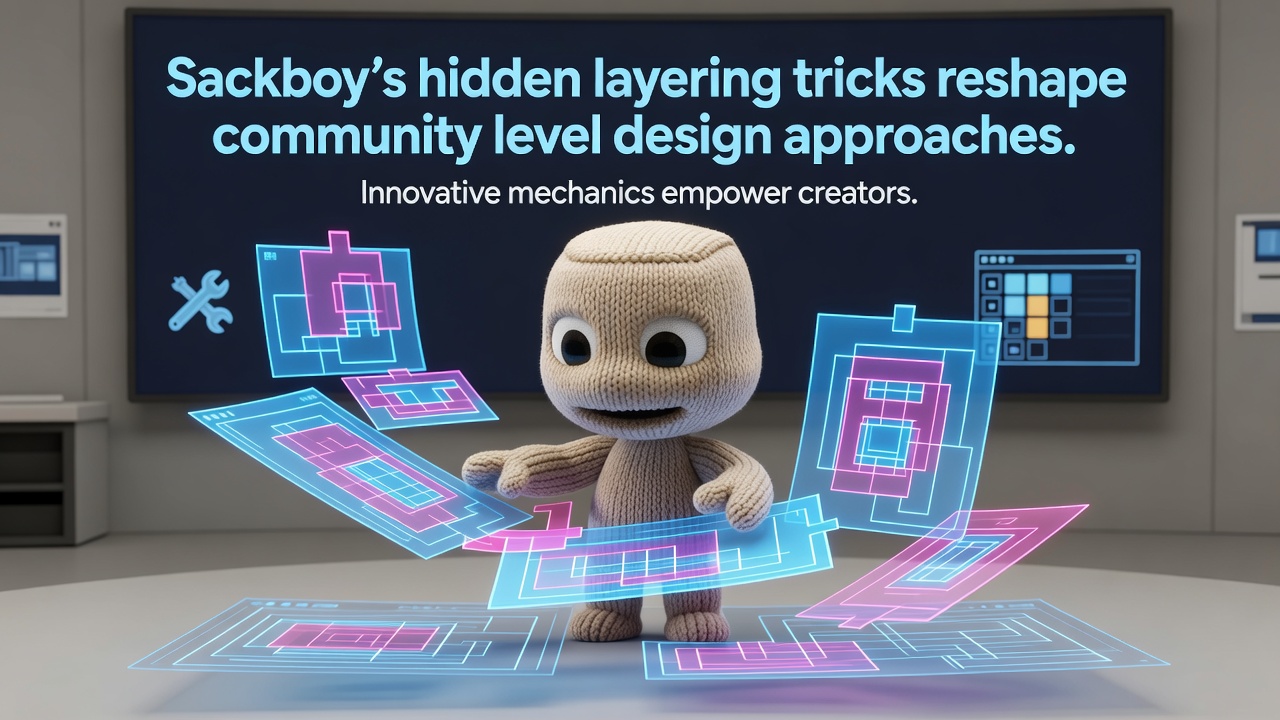
Each layer in the game engine supports distinct collision rules and rendering priorities, so designers position thin platforms or decorative elements to create parallax effects without increasing thermometer costs significantly. Data from player-shared tutorials shows that combining thin and thick layers produces optical illusions where distant backgrounds appear integrated with interactive foregrounds, and this technique appears frequently in user-generated content uploaded through official servers.
Those who've studied the engine note that Sackboy's movement interacts differently depending on layer alignment, which means creators must account for jump arcs and grab points across planes. Community forums document cases where hidden layering allows secret paths to remain invisible until specific angles or lighting conditions reveal them, adding replay value to finished stages.
Community Adoption Patterns and Recent Trends
Level design groups have shared templates that standardize multi-layer construction sequences, reducing the time required to build complex scenes. As of August 2026, several ongoing community challenges focus exclusively on layering constraints, with participants uploading entries that demonstrate new combinations of sticker placement and material layering to simulate 3D structures within the 2.5D framework.
Figures from industry tracking groups reveal steady growth in downloads for levels that employ these methods, and creators often credit shared asset packs for accelerating experimentation. One documented case involved a designer who used offset layers to produce moving shadow effects that synchronized with Sackboy's position, which other builders later adapted for puzzle sequences.
Technical Constraints and Optimization Strategies
Thermometer limits remain a primary concern during layering experiments, yet developers have identified ways to reuse layer slots across multiple sections by swapping object visibility states. Research indicates that careful grouping of static elements in background layers frees resources for foreground interactivity, and this balance appears in many highly rated community stages.
Engine updates have refined how layers handle particle effects and lighting, allowing smoother transitions when Sackboy crosses plane boundaries. Observers note that these refinements have encouraged larger collaborative projects where multiple contributors manage separate layer groups within the same level file.
Examples from Shared Creations
Take one widely downloaded stage that uses alternating thin layers to simulate a collapsing structure, where each plane reveals new hazards only after the player advances. Another series of levels employs layered decals to create false walls that dissolve under specific lighting, guiding Sackboy through hidden routes without explicit markers.
Community members frequently reference these examples when teaching newcomers, and shared documentation outlines step-by-step layer alignment processes that maintain performance across different console versions. According to reports compiled by the Entertainment Software Association, user-generated content featuring advanced layering accounts for a measurable portion of total playtime in recent years.
Impact on Broader Design Practices
Designers outside the original LittleBigPlanet series have examined these techniques when exploring similar depth systems in other platformers. The methods emphasize efficient use of available planes rather than adding more objects, which aligns with performance guidelines distributed through official developer resources.
Academic papers from institutions in Canada and Australia have examined how layering influences spatial reasoning in players, and findings suggest repeated exposure to layered environments correlates with improved navigation skills in digital spaces. These observations feed back into community discussions, where builders refine approaches based on observed player behavior patterns.
Conclusion
Layering techniques centered on Sackboy continue to evolve through collective experimentation, and the resulting levels demonstrate measurable increases in visual density and mechanical variety. Community resources and shared templates ensure these methods remain accessible while pushing the boundaries of what the engine supports, with ongoing updates in 2026 highlighting new applications in collaborative challenges and individual projects alike.