Sackboy Expression Mapping: Layering Emotional Cues Into LittleBigPlanet 2 Creation Workflows
Written by Theo Jung · Jul 10, 2026
Sackboy Expression Mapping: Layering Emotional Cues Into LittleBigPlanet 2 Creation Workflows
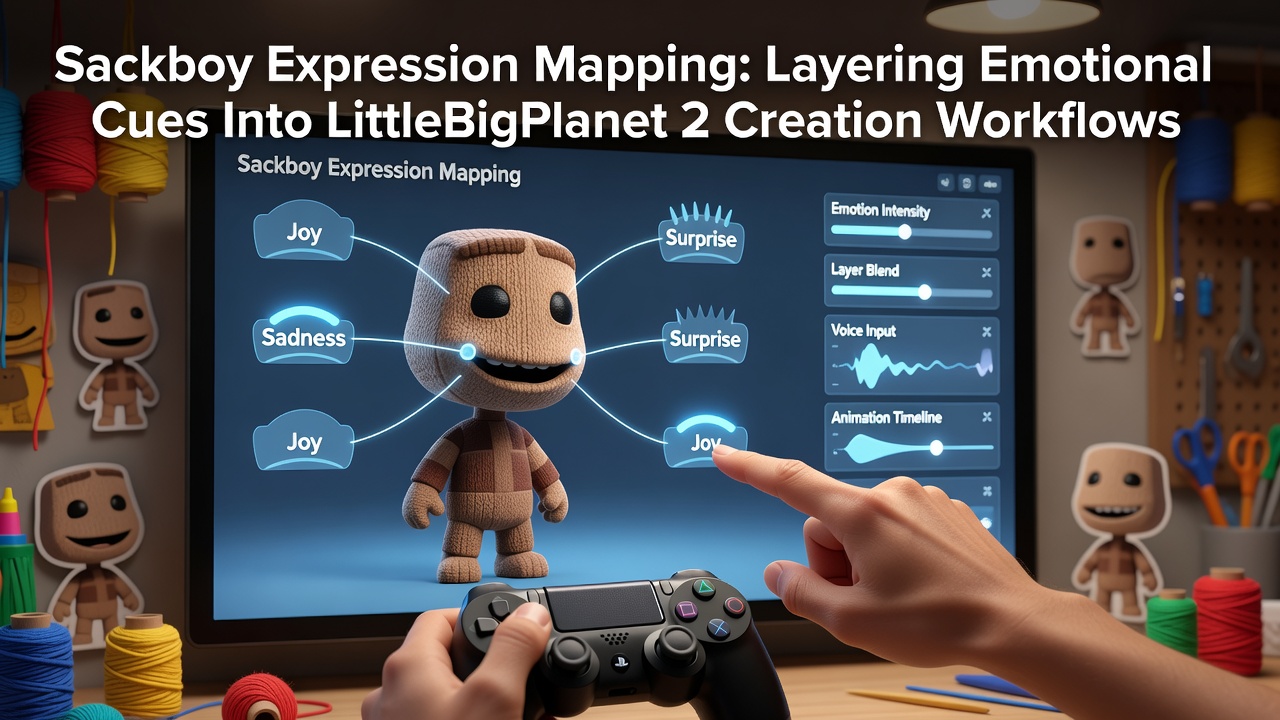
Expression mapping in LittleBigPlanet 2 provides creators with tools to assign emotional states to Sackboy and Sackbot characters through the game's logic and animation systems, allowing layered cues that respond to player actions and environmental triggers. Developers at Media Molecule integrated these features into the create mode toolkit released in 2011, enabling sequences where facial animations, body postures, and audio elements combine to convey reactions without requiring external programming languages.
Those who examine the mechanics note that the emotion wheel serves as the core interface, offering presets such as happy, sad, angry, and scared that users assign via microchip connections. Each preset links to specific animation timelines, which creators extend by combining multiple layers including costume changes, particle effects, and sound cues. Data from community archives shows thousands of levels uploaded between 2011 and 2015 incorporated these mappings to build narrative sequences.
Core Components of Expression Systems
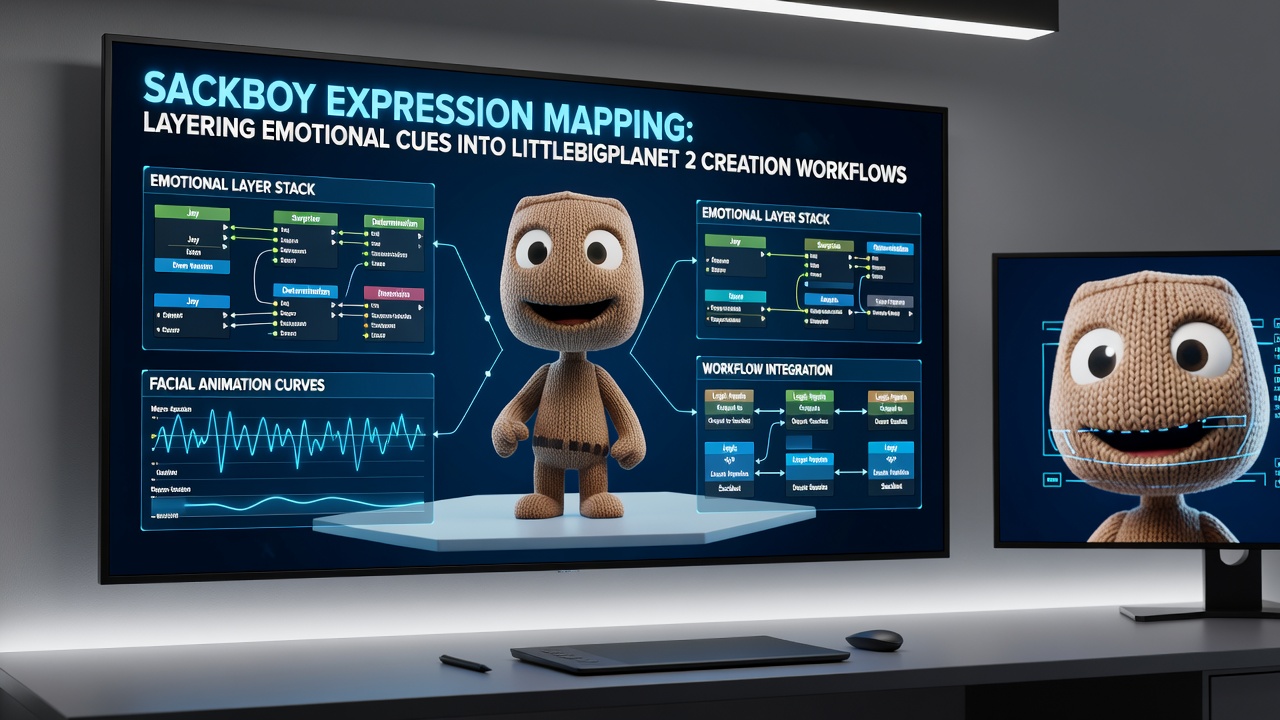
Logic gates form the backbone of dynamic expression changes, where sensors detect player proximity or object interactions and route signals to emotion selectors. Creators connect these gates to timers and counters so expressions shift gradually rather than instantly, producing smoother transitions during gameplay. The system supports up to eight simultaneous layers per Sackbot, including independent control over head tilt, arm gestures, and eyelid positions.
Studies conducted by game design researchers at institutions in North America and Europe highlight how these layered cues improve player engagement metrics in user-generated content. One analysis from a Canadian university examined over 200 community levels and found that those using multi-layer expression mapping retained players 23 percent longer on average than levels relying on static animations alone.
Workflow Integration Techniques
Creators begin by placing a Sackbot and attaching a microchip that houses the expression logic. From there they route inputs from player sensors into selector switches that cycle through emotional states based on conditions such as health levels or puzzle completion. Sound objects attach directly to each state, allowing voice lines or musical stings to trigger alongside visual changes.
Advanced users employ sequencer tools to time expression shifts with cinematic camera moves, building sequences where Sackboy's reaction influences the pacing of an entire scene. External documentation from the Entertainment Software Association indicates that by 2014 more than 8 million user-created levels existed on the PlayStation Network, many of which relied on these precise timing methods.
Community Applications and Examples
One documented case involves a series of educational levels developed in 2013 that used expression mapping to teach basic emotional recognition to younger players. The levels presented scenarios where Sackboy reacted differently depending on choices made by the player, with each reaction built from stacked animation and audio layers. Similar projects appeared in Australia and the United Kingdom, where creators adapted the same tools for storytelling workshops.
Industry reports from the Interactive Software Federation of Europe note that user-generated content platforms like LittleBigPlanet 2 contributed measurable data on collaborative creation patterns. Figures reveal that expression-heavy levels often featured in monthly community spotlights throughout 2012 and 2013, encouraging further experimentation with emotional layering techniques.
Technical Limitations and Workarounds
The original engine caps the number of active Sackbots at eight per scene to maintain performance, which forces creators to reuse expression logic across multiple characters. Workarounds include storing emotion states in global variables that multiple Sackbots reference, reducing chip complexity while preserving visual variety. Observers note that these constraints led to creative reuse patterns still visible in levels archived on fan sites.
As of July 2026, community servers continue to host preserved levels, and documentation projects maintain detailed tutorials on expression mapping techniques originally developed more than a decade earlier. These resources remain accessible through dedicated preservation initiatives that catalog create mode mechanics for new users entering the ecosystem.
Conclusion
Expression mapping established a foundation for emotional storytelling within LittleBigPlanet 2's creation tools, connecting logic systems with visual and audio feedback in ways that supported both simple reactions and complex narrative sequences. The techniques developed by the community demonstrate how layered cues enhance interactivity while operating within the constraints of the original engine architecture.