Rhythm Multiplier Chains: From Arcade Origins to Modern Game Ports
Written by Olivia Washington · Jun 19, 2026
Rhythm Multiplier Chains: From Arcade Origins to Modern Game Ports
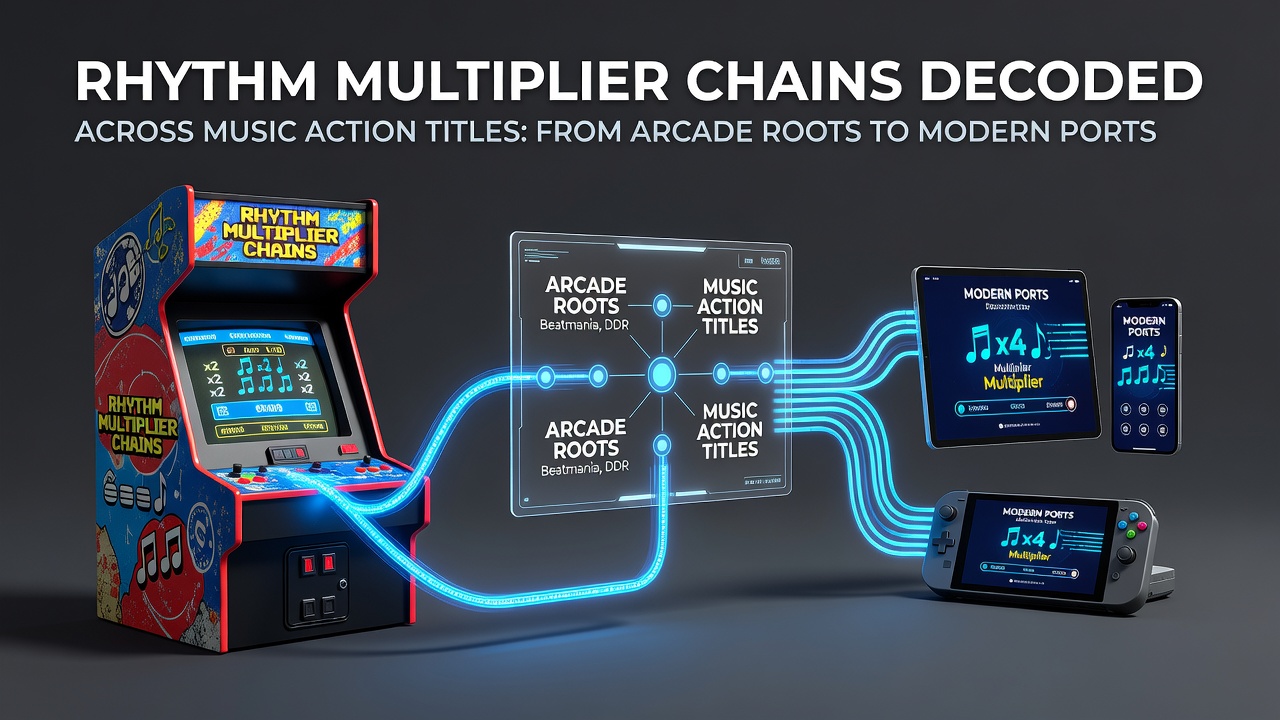
Rhythm action titles have incorporated multiplier chains as core scoring systems since the late 1990s when arcade developers first combined timing precision with escalating point bonuses; these mechanics reward consecutive accurate inputs while penalizing errors through chain breaks that reset accumulated multipliers. Early implementations appeared in titles developed by Konami and similar studios where players stepped or pressed buttons in sync with on-screen cues and built chains that could multiply base scores by factors ranging from two to eight depending on the game version and difficulty setting.Arcade Foundations and Initial Chain Designs
Arcade cabinets established the template through hardware constraints that demanded immediate visual feedback for hit accuracy and chain status; players observed rising multipliers on dedicated screen sections while music tracks dictated the rhythm patterns. Data from industry records shows that games released between 1998 and 2002 refined these systems by introducing visual indicators such as glowing borders around note markers that intensified with longer chains and color shifts that signaled multiplier thresholds. Observers note how these visual cues helped maintain engagement across extended play sessions in competitive arcade environments where multiple players rotated through the same machine.
Transition to Home Consoles and Expanded Mechanics
Console ports beginning in the early 2000s adapted arcade chain logic to controller inputs while adding new layers such as hold notes and simultaneous button presses that contributed to chain continuity; developers retained the core reset-on-miss rule yet introduced recovery windows that allowed partial chain restoration after brief errors. Research from academic sources including studies conducted at institutions in Japan indicates that these adjustments preserved the tension of multiplier management while accommodating the different ergonomics of home controllers compared with arcade pads. Ports released through 2010 further integrated practice modes where players could isolate sections of tracks to practice chain-building sequences before attempting full songs under scoring conditions.
Technical Decoding of Multiplier Progression
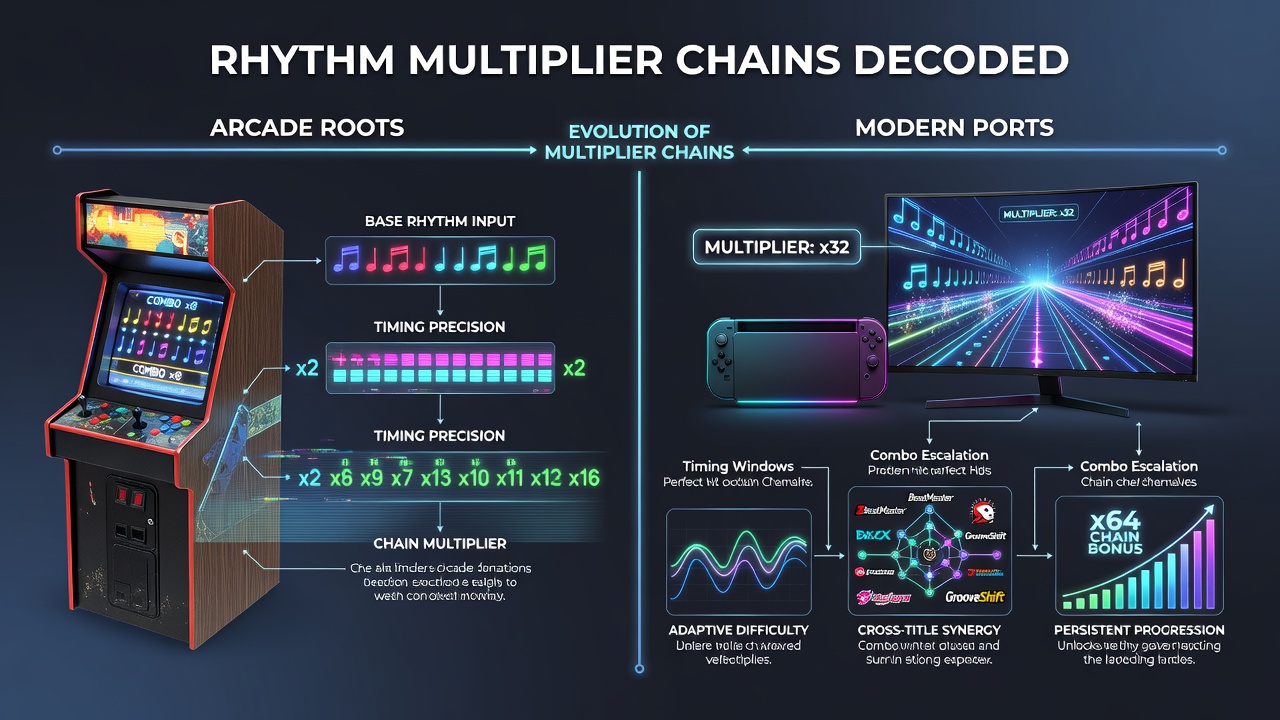
Multiplier progression typically follows a tiered structure where the first several consecutive hits establish a base multiplier that then scales upward at predetermined intervals; for instance many systems grant an additional multiplier level after every four or eight perfect inputs depending on the title's internal calibration. Those who have examined source code documentation from various developers describe how internal counters track hit streaks separately from displayed multipliers to allow for hidden bonus calculations that affect final scores without altering the visible chain indicator. Industry reports compiled by organizations such as the Entertainment Software Association reveal consistent patterns across titles where longer chains correlate with exponential rather than linear score growth which encourages players to prioritize accuracy over speed in later sections of songs.
Contemporary Ports and Updated Implementations
Modern ports available on current-generation hardware and digital storefronts maintain the foundational chain mechanics while incorporating additional variables such as dynamic difficulty adjustments that alter note density in response to player performance; these adaptations allow chains to continue across varying challenge levels without abrupt breaks. Ports scheduled for release windows including June 2026 continue this evolution by adding online leaderboards that display peak chain lengths alongside total scores which creates new competitive layers around multiplier mastery. European regulatory bodies including those monitoring digital content distribution have documented how such features extend playtime metrics across player demographics while preserving the original arcade emphasis on precision timing.
Cross-Platform Variations in Chain Behavior
Ports to mobile platforms introduced touch-screen specific modifications where swipe gestures replace button presses yet retain the same multiplier escalation rules and reset conditions; developers adjusted timing windows slightly to account for input latency differences across devices. Those examining data from multiple regions find that Asian markets tend to feature stricter timing tolerances in mobile versions compared with North American releases which influences how quickly players can achieve maximum multiplier tiers. Academic analyses from Canadian research groups have compared chain lengths across platforms and found that the underlying mathematical progression remains nearly identical even when input methods change substantially.
Conclusion
Multiplier chains continue to serve as the central scoring framework connecting arcade-era rhythm action titles with their modern ports across decades of technological change. The consistent design principles of consecutive accuracy rewards and reset penalties have adapted to new hardware without losing the core tension that defines these games. Future implementations scheduled through 2026 and beyond will likely preserve these fundamentals while layering additional competitive and accessibility features onto the established chain systems.