Rhythm Game Multipliers: Examining Combo Chains Across Key Titles
Written by Theo Jung · Jun 12, 2026
Rhythm Game Multipliers: Examining Combo Chains Across Key Titles
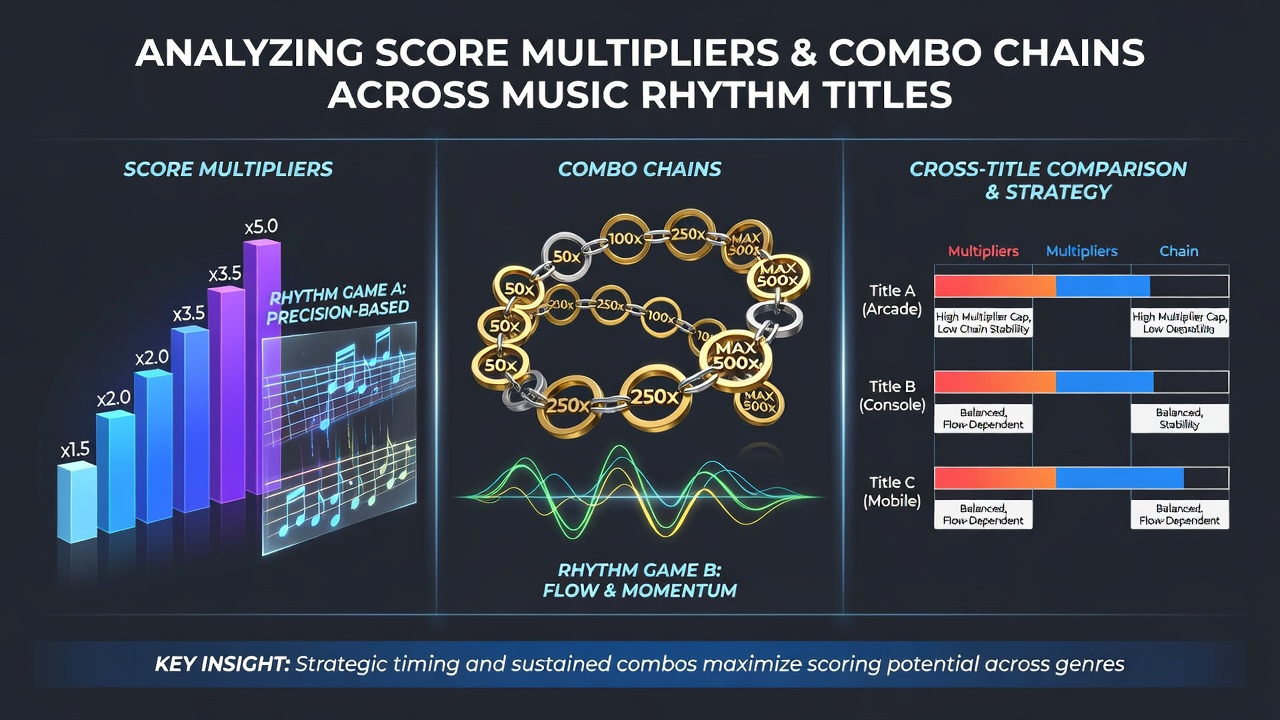
Score multipliers and combo chains form core systems in music rhythm titles, where players maintain sequences of accurate inputs to increase point values and trigger bonuses, and developers have refined these mechanics across decades of releases in arcades and home consoles.
Early titles established basic frameworks that later games expanded with layered rules, and data from industry reports shows consistent player engagement tied to these progression elements in both competitive and casual settings.
Foundational Systems in Classic Arcade Entries
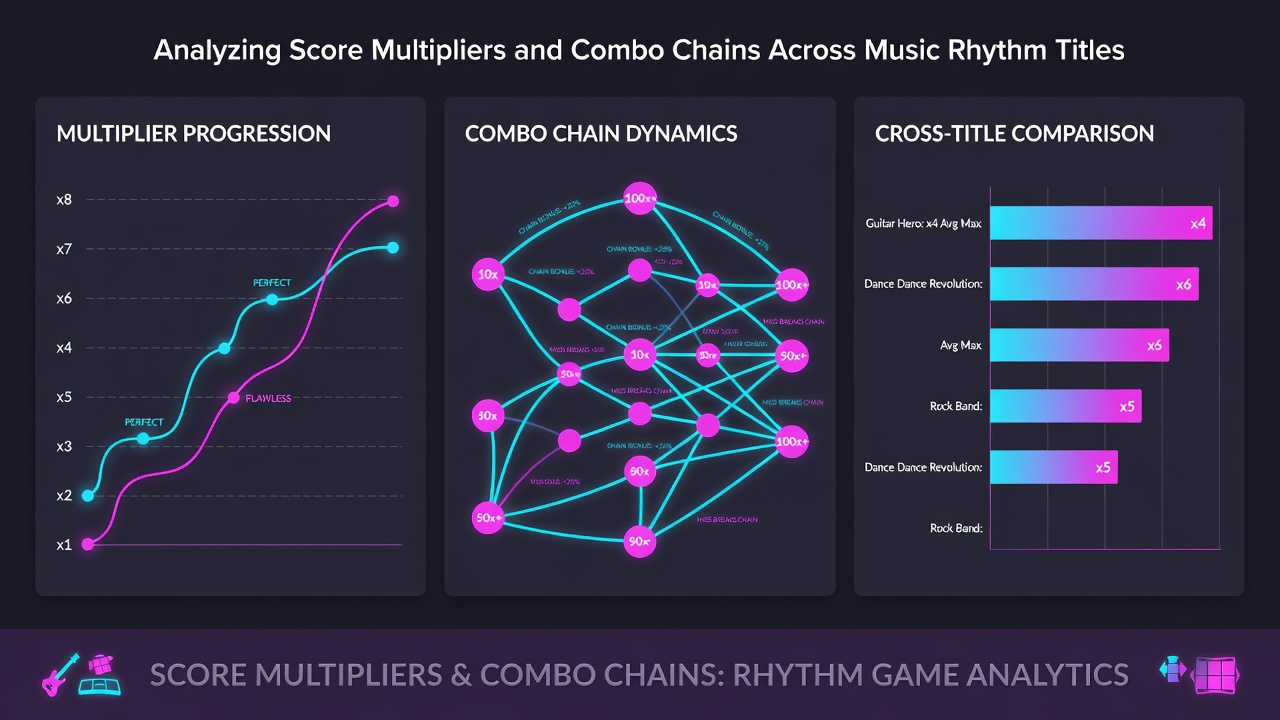
Dance Dance Revolution introduced step-based combos that built multipliers through sustained accuracy, where four consecutive perfect steps activated a 2x multiplier that scaled upward with longer chains, and this structure carried into console ports that added visual feedback for chain maintenance. Beatmania followed similar patterns with key press sequences, rewarding unbroken note streams with escalating bonuses that peaked at 8x multipliers in certain modes.
These early implementations relied on simple counters that reset on misses, yet they created tension during dense note patterns, and observers note how regional arcade operators adjusted difficulty curves to balance chain opportunities for different player skill levels.
Evolution in Guitar-Based and Band Simulation Games
Guitar Hero titles layered star power mechanics onto core combo chains, where successful streaks multiplied base note values while overdrive segments doubled the active multiplier for limited durations, and Rock Band expanded this further with multi-instrument synchronization that granted shared multipliers across band members when all maintained individual chains. Data indicates these combined systems encouraged coordinated play sessions, particularly in multiplayer setups documented in trade analyses from North American markets.
Subsequent updates refined timing windows and introduced variable multipliers based on note density, allowing players to achieve higher peaks during solos, while European development teams incorporated regional music licensing that influenced chain lengths in specific track selections.
Modern Implementations in Digital and VR Platforms
Osu! and similar community-driven games feature customizable multiplier systems tied to accuracy ratings, where 300-point hits extend chains and apply progressive bonuses up to 10x or higher depending on selected mods, and Beat Saber applies similar logic to saber swings with combo counters that unlock scoring multipliers after set thresholds like 20 or 50 consecutive hits. Research from academic sources in the Asia-Pacific region highlights how VR adaptations adjust these chains for motion tracking precision, reducing reset frequency compared to traditional controllers.
June 2026 updates in several live-service rhythm platforms introduced dynamic multiplier scaling based on session length, rewarding longer play periods with temporary boosts that reset daily, and this approach aligns with broader trends in engagement metrics tracked by industry organizations.
Comparative Analysis of Thresholds and Bonuses
Across titles, combo thresholds vary significantly, with some requiring only three notes for initial multipliers while others demand eight or more before escalation begins, and this variance affects strategy as players prioritize note patterns that support chain continuity over isolated high-value targets. Multipliers often cap at fixed levels such as 4x or 8x, yet certain modes allow temporary overrides through special items or synchronized events.
Those who've studied scoring logs from global tournaments report that optimal chain management frequently separates top placements, since each missed input not only ends the multiplier but also forfeits accumulated bonus points that compound over extended sequences.
Design Considerations adn Player Adaptation Patterns
Developers balance multiplier accessibility against risk by incorporating recovery mechanics like late hits that preserve partial chains or visual cues that preview upcoming note clusters, and this design philosophy appears consistently in both Japanese and Western releases. Players adapt through practice modes that display real-time multiplier projections, allowing targeted improvement on sections prone to breaks.
According to figures from the Entertainment Software Association, rhythm game segments continue to represent steady portions of overall music game revenue, with combo-focused scoring contributing to replay value in competitive leaderboards.
Conclusion
Score multipliers and combo chains remain defining features that shape progression and competition in rhythm titles, evolving from straightforward streak counters into sophisticated layered systems that integrate with hardware capabilities and player communities, and ongoing refinements ensure these mechanics adapt to new platforms while preserving core tension and reward structures.