Resource Distribution Tactics in Studio Simulation Games and Community Creation Platforms
Written by Riley Friedrich · Aug 19, 2026
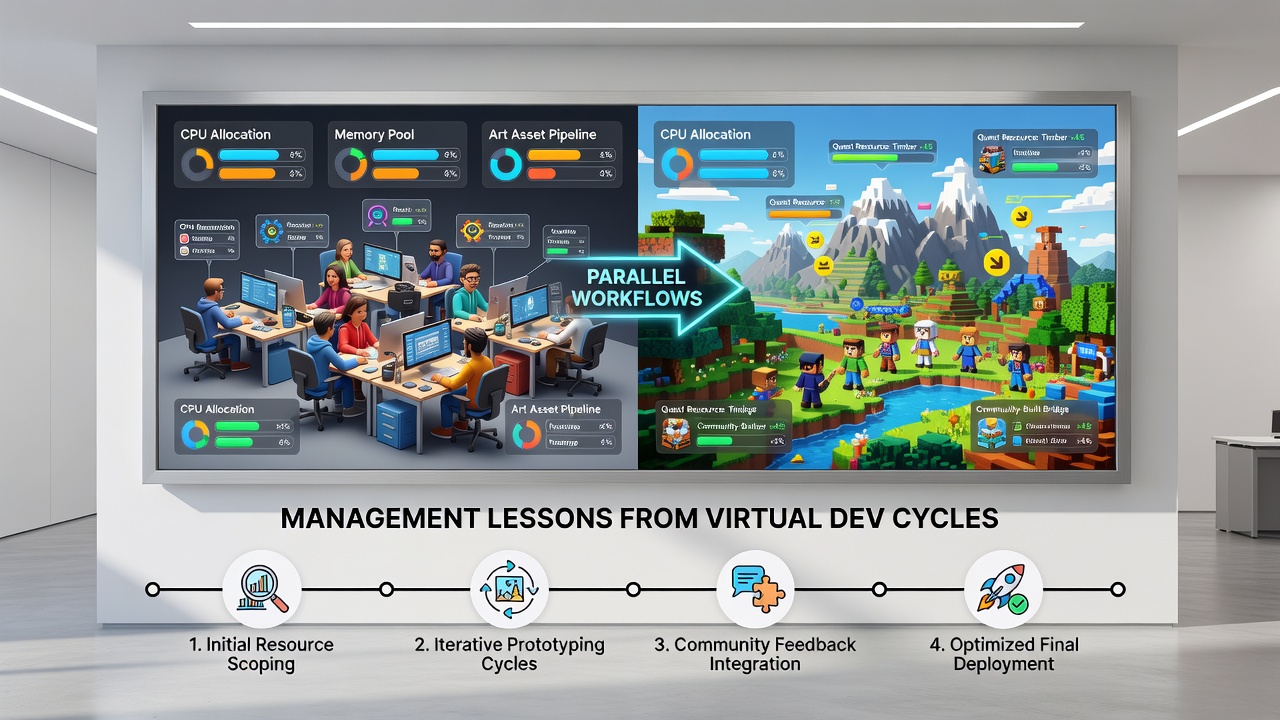
Resource Distribution Tactics in Studio Simulation Games and Community Creation Platforms
Studio simulation titles place players in charge of assigning staff roles, balancing project timelines, and distributing limited budgets across development phases while user-generated adventure platforms require creators to manage asset libraries, time investments, and collaborative contributions during level construction. Observers note that both environments create controlled settings where participants practice prioritization under constraints, and these virtual scenarios mirror patterns found in professional project oversight across creative sectors. Researchers have documented how repeated cycles of planning, execution, and adjustment in these digital spaces build familiarity with trade-offs that arise when multiple tasks compete for the same finite pool of hours or materials.
Core Mechanics of Allocation in Simulation Environments
Simulation games model studio operations by presenting players with rosters of employees who possess distinct skill sets, and successful progression depends on matching those skills to appropriate tasks without exhausting the overall capacity available in a given week or month. Data shows that players who rotate team members between research, coding, and testing phases maintain steadier output compared with those who overcommit specialists to single streams. External reports from the Entertainment Software Association indicate that similar allocation challenges appear in real development pipelines where studios track utilization rates across disciplines. One study revealed that participants who treat each in-game deadline as a fixed boundary rather than a flexible target develop stronger habits for sequencing dependent activities.
Asset and Time Management in User-Created Worlds
Adventure creation tools shift the focus from personnel oversight to the stewardship of visual, audio, and logic components that users assemble into playable experiences, and creators must decide how many unique elements to introduce before diminishing returns set in. Those who have examined community projects find that early decisions about reuse of existing assets versus creation of new ones directly influence completion rates and overall coherence. Figures reveal that projects exceeding a certain threshold of custom objects encounter performance bottlenecks that force later pruning, a pattern that parallels budget overruns in commercial productions. People often discover that setting internal milestones for prototype stages prevents the accumulation of unfinished features that drain remaining development windows.
Observable Parallels Across Both Formats
Both simulator and creation-tool ecosystems reward the same underlying practice of mapping available resources against projected outcomes before work begins, and this mapping process repeats across successive projects as participants refine their forecasting accuracy. What's interesting is that failure states in each context usually stem from the same root cause: simultaneous expansion of scope and team or asset load without corresponding increases in supporting infrastructure. Industry organizations such as the Interactive Games and Entertainment Association have published summaries noting that virtual environments compress these cause-and-effect relationships into shorter timeframes than live studio settings allow. Observers note that repeated exposure to such compressed feedback loops accelerates recognition of when additional investment in one area necessitates cuts elsewhere.
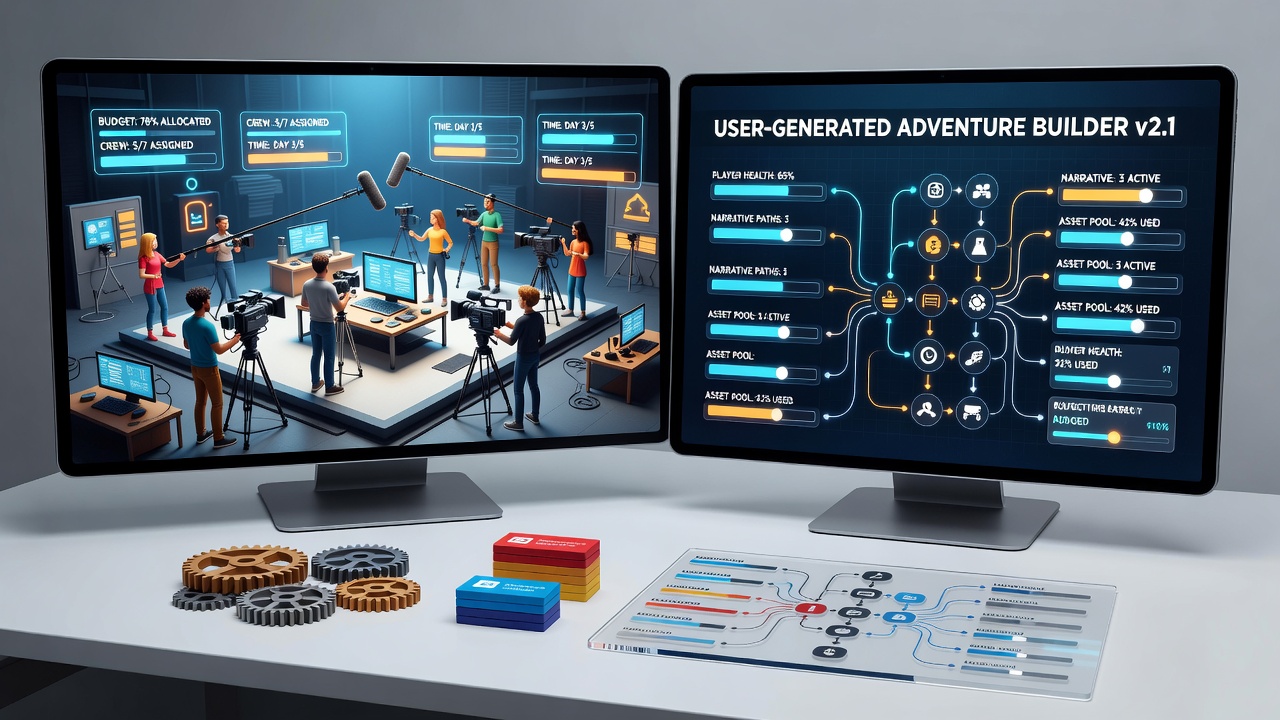
As of August 2026, updated usage analytics from major platform providers continue to track how many users revisit older projects to reallocate previously spent resources, and these revisits correlate with higher completion percentages on subsequent attempts. The pattern holds whether the revisits occur inside a staff-management simulation or inside a shared adventure editor, suggesting that the cognitive skill of rebalancing under new constraints transfers between the two formats. Experts have observed that players who maintain running inventories of both committed and reserve capacity avoid the common trap of discovering shortfalls only after key milestones pass.
Transferable Practices for Broader Application
Participants who move from virtual cycles into professional coordination roles frequently cite the habit of front-loading risk assessment as one direct carry-over, because both game types penalize late discovery of incompatible dependencies. Researchers discovered that individuals who document their allocation choices at each decision point build personal reference sets that improve future estimates, regardless of whether the documented choices involved employee schedules or object counts. The reality is that these documentation practices scale beyond entertainment contexts into any domain where multiple parallel workstreams draw from shared pools. Those who've studied this know that the visibility of cause and effect inside game interfaces lowers the barrier to forming such habits compared with opaque real-world reporting systems.
Conclusion
Virtual development cycles in studio simulators and user-generated adventure tools therefore function as accessible laboratories for examining resource distribution under explicit constraints, and the lessons extracted remain applicable wherever teams or creators must decide how to apportion limited inputs across competing outputs. Continued analysis of player behavior within these environments supplies ongoing data points that complement traditional management research, particularly when those data points highlight repeatable sequences of planning, adjustment, and review.