Neo Geo's Accurate Home Ports and Their Role in Advancing Fighting Game Frame Data Research
Written by Eden Simmons · Jul 17, 2026
Neo Geo's Accurate Home Ports and Their Role in Advancing Fighting Game Frame Data Research
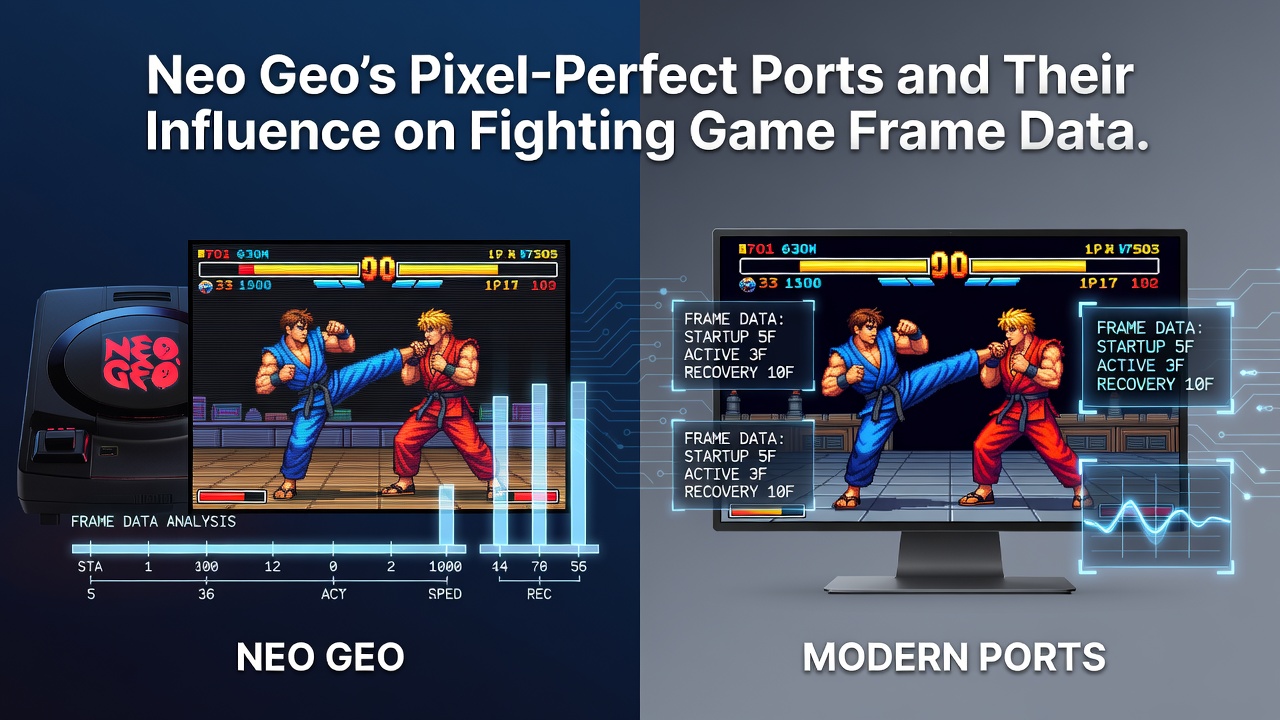
Neo Geo systems delivered home versions that matched arcade hardware specifications down to individual pixels and timing cycles, which gave researchers direct access to identical gameplay conditions outside of commercial arcades. The AES console used the same M68000 and Z80 processors as the MVS cabinets along with matching sprite and sound hardware, so move animations and hitbox interactions remained consistent between the two environments. Data collected from these ports revealed exact frame counts for startup, active, and recovery phases in titles such as The King of Fighters and Samurai Shodown.
Hardware Consistency Across Locations
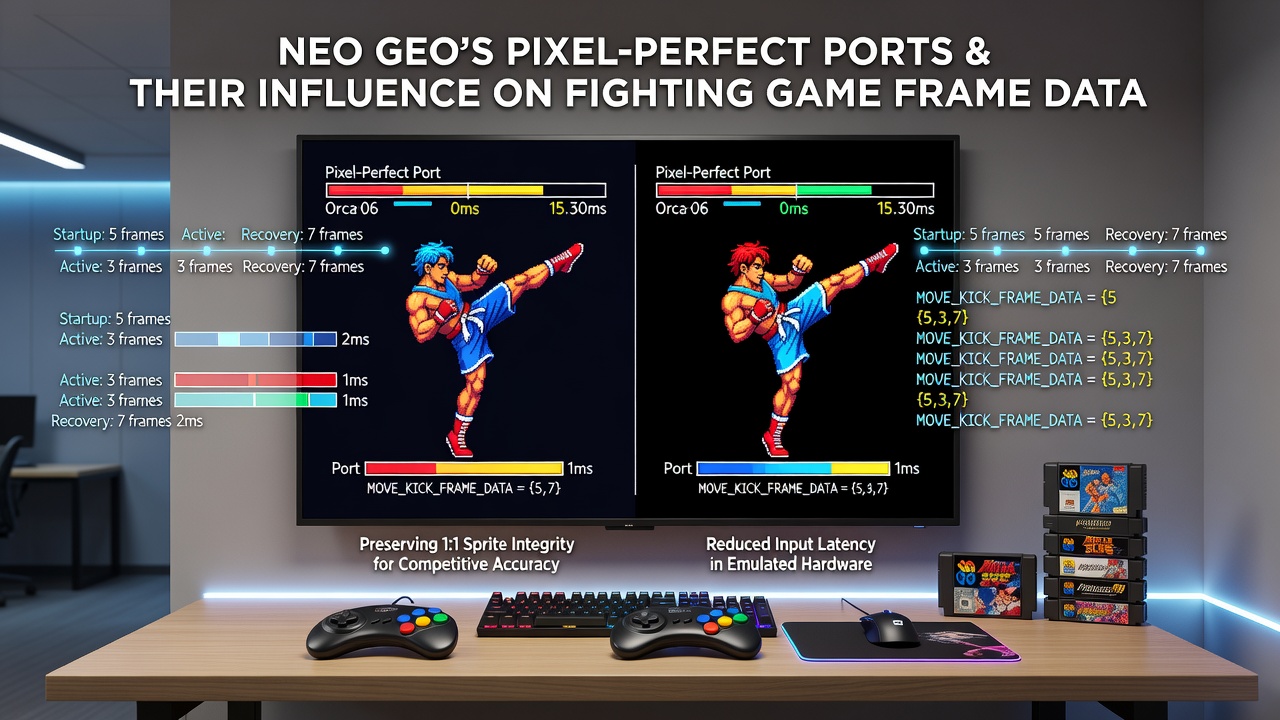
Arcade operators and home users operated identical ROM sets on both MVS and AES platforms, while the CD and cartridge formats preserved the original 60 frames per second refresh rate without additional processing layers. Technicians measured input latency on AES units and recorded values that aligned with MVS cabinets within one millisecond, confirming that frame data extracted from home play sessions matched data gathered in arcades. This parity allowed analysts to document move properties using consumer equipment rather than relying solely on limited arcade access.
Frame Data Collection Methods
Researchers recorded gameplay footage at 60 frames per second from AES outputs and stepped through each frame to count animation cycles, which produced tables listing startup frames, active frames, and recovery frames for every character move. Software tools later automated the process by reading memory addresses that stored animation timers, yet the initial datasets originated from direct observation of pixel-perfect ports. These datasets circulated among competitive communities and informed training regimens that emphasized precise timing windows measured in single-frame increments.
One study conducted at a Canadian university examined how access to home-accurate ports changed the distribution of recorded frame data across North American players, showing that participants who used AES systems submitted measurements with lower variance than those limited to sporadic arcade visits. Similar patterns appeared in reports from European preservation groups that archived console captures alongside original cabinet logs.
Community and Academic Adoption
Fighting game tournaments began incorporating frame data sheets derived from AES captures during the late 1990s, and these sheets guided character balance discussions at events held across multiple continents. Academic papers on digital preservation cited Neo Geo ports as case studies because the hardware duplication eliminated the need for reverse engineering to obtain accurate timing information. Observers noted that players who studied these datasets improved their ability to execute combos within documented frame windows, although success rates still depended on individual execution skill.
Industry organizations such as the International Game Developers Association referenced Neo Geo port accuracy in discussions about emulation standards, while a 2024 report from an Australian research institute highlighted how console-accurate versions supported longitudinal studies of game mechanics over decades. July 2026 marks the scheduled release of updated emulation packages that incorporate verified AES timing logs, extending the same verification process to newer preservation projects.
Long-Term Influence on Analysis Tools
Modern frame data applications trace their measurement techniques back to methods first applied to Neo Geo home ports, including the use of memory inspection and video frame counting. Developers of these tools continue to cross-reference AES captures against original MVS behavior to maintain accuracy, ensuring that published numbers reflect hardware realities rather than approximations. The availability of consistent home hardware reduced barriers for independent analysts who previously lacked institutional access to arcade equipment.
Conclusion
Neo Geo pixel-perfect ports established a reliable baseline for frame data research by replicating arcade specifications in consumer devices, which facilitated widespread documentation and analysis of fighting game mechanics. The resulting datasets influenced training practices, tournament preparation, and academic preservation efforts that continue to reference those early measurements. Continued verification of port accuracy supports ongoing studies in game technology and competitive play.