Hardware Boundaries as Creative Sparks in 1990s Arcade Ports
Written by Sam Wagner · Jul 31, 2026
Hardware Boundaries as Creative Sparks in 1990s Arcade Ports
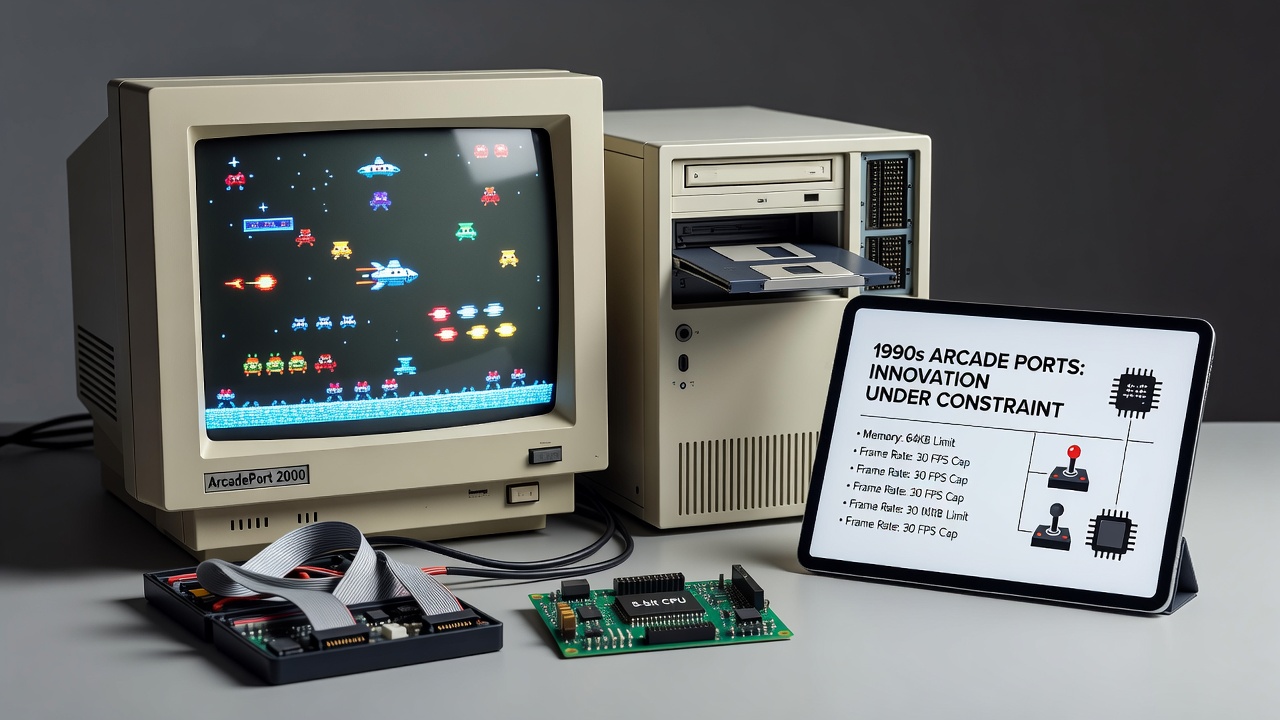
Arcade ports from the 1990s often required developers to transform severe hardware restrictions into deliberate design choices that shaped entire gameplay loops, and this pattern appears across multiple systems where memory ceilings and processing speeds forced teams to prioritize clever mechanics over direct replication. Data from industry archives shows that consoles such as the Super Nintendo Entertainment System and Sega Genesis operated with far less RAM and slower clock rates than their arcade counterparts, which pushed programmers to invent new scoring systems, condensed stages, and interactive elements that compensated for missing frames or reduced sprite counts. Observers note that these adaptations frequently resulted in ports that diverged significantly from original cabinet experiences while still delivering engaging play sessions that capitalized on the available resources.
Core Technical Constraints Across Major Platforms
Processing limitations defined the era when arcade titles moved to home hardware, and cartridge sizes capped at 16 megabits or less meant that full animation sets and background layers had to be stripped or recombined, which in turn encouraged designers to introduce variable difficulty curves tied directly to remaining memory banks. Research indicates that color palette restrictions on 16-bit machines, often limited to 256 simultaneous colors from a larger master set, prompted artists to reuse tiles in modular ways that created visual variety through clever layering rather than new assets. Those who studied port development records find that sound channels, frequently reduced from eight or more in arcades to four or six at home, led teams to implement dynamic music that shifted based on player performance instead of relying on continuous tracks.
Memory Management Driving Level Design Shifts
Developers addressed RAM shortages by dividing stages into loadable segments that activated only when needed, and this segmentation produced gameplay innovations such as hidden routes that rewarded exploration within tight boundaries or enemy patterns that reused the same sprite data across multiple encounters. According to preservation project documentation, ports like those of fighting games often replaced full character rosters with unlockable variants or palette swaps that conserved storage space while extending replay value through new move combinations. Evidence from hardware teardown analyses reveals that direct memory access techniques allowed some teams to push beyond stated limits, resulting in hybrid visuals where foreground action remained smooth even as backgrounds scrolled at reduced resolutions.
Case Examples of Constraint-Based Innovation
One notable instance involves beat-em-up titles where enemy count limits on screen prompted the creation of tag-team mechanics that let players switch between characters mid-combo, effectively multiplying apparent action without increasing simultaneous sprite loads. Figures from console sales data during the mid-1990s demonstrate that such ports maintained strong market performance precisely because these workarounds turned hardware ceilings into strategic depth. Another pattern emerged in racing games where track complexity had to be simplified, which led designers to add power-up systems and branching paths that rewarded timing and resource management over pure speed simulation.
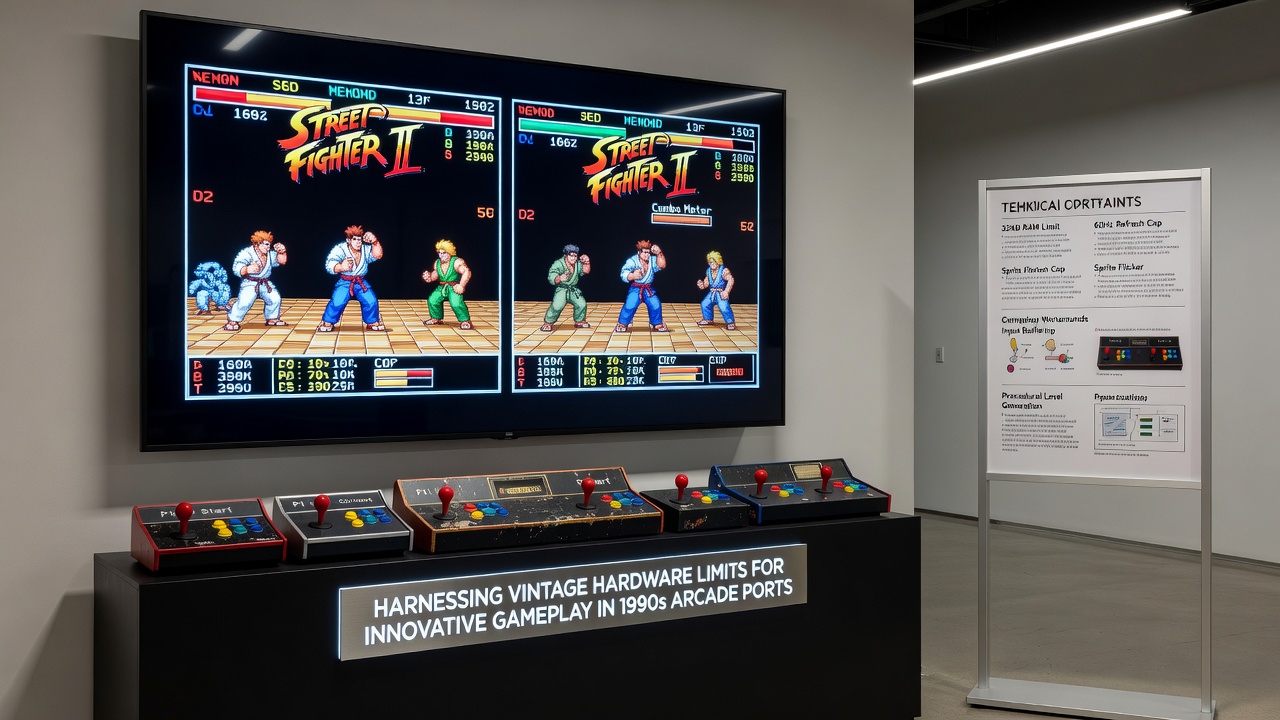
Platform-specific quirks further influenced outcomes, and the Genesis's faster processor but weaker color support compared with the SNES encouraged different creative solutions such as higher frame rates paired with dithered shading that simulated depth. International Game Developers Association reports highlight how European and North American teams exchanged techniques for handling these differences, producing ports that incorporated region-specific adjustments like altered difficulty spikes to match local player expectations. Academic studies from institutions in Canada and Australia have examined how these technical negotiations contributed to broader trends in game design that persisted into later console generations.
Long-Term Influence on Subsequent Development Practices
Techniques refined during 1990s ports carried forward into later eras even as hardware advanced, and modular asset reuse combined with performance-gated features became standard tools that studios applied when targeting multiple platforms simultaneously. What's interesting is that several mechanics born from necessity, including dynamic difficulty adjustment and efficient enemy AI that scaled with available cycles, reappeared in modern indie titles that deliberately emulate vintage constraints for stylistic effect. Data compiled by the International Centre for the History of Electronic Games shows continued interest in these methods, with exhibitions planned through July 2026 that will showcase original development notes alongside playable reconstructions of constrained ports.
Industry organizations across regions continue to catalog these adaptations, and trade analyses from bodies in the European Union and Asia-Pacific note that the emphasis on inventive problem-solving during the 1990s established benchmarks for optimization that remain relevant in mobile and embedded systems development today. Those who have reviewed archival codebases observe that many solutions relied on assembly-level tweaks that maximized every available byte, which fostered a culture of precision that later gave way to higher-level engines yet still informs performance-critical sections of contemporary games.
Conclusion
Hardware limits in 1990s arcade ports generated a distinctive set of design strategies that turned technical obstacles into core gameplay elements, and records from multiple development studios confirm the widespread adoption of these approaches across genres. Preservation efforts and ongoing research underscore how these innovations shaped player expectations and technical standards that extended well beyond the decade in which they originated.