Exploring Multiplier Stacking Dynamics in Hybrid Rhythm Management Simulations
Written by Eden Simmons · May 24, 2026

Exploring Multiplier Stacking Dynamics in Hybrid Rhythm Management Simulations
Hybrid rhythm and management simulations combine timed input sequences with resource allocation systems, and observers note that multiplier stacking emerges when players align beat-perfect actions with strategic upgrades in staff, venues, or equipment. Data from industry reports shows these mechanics appear across multiple titles released between 2023 and 2025, where each successful rhythm chain feeds into management bonuses that compound scores exponentially rather than additively. Researchers at the University of Melbourne documented similar patterns in a 2024 study examining player progression logs from twelve commercial hybrids, revealing that stacking often peaks during mid-game phases when tempo shifts coincide with facility expansions.
Basic multipliers in these titles typically start at 1.5x for consistent rhythm hits and rise through management decisions such as hiring specialized crew members or unlocking venue acoustics that boost audio synchronization. When both systems interact, stacking follows predictable sequences: a rhythm multiplier of 2.0x merges with a management bonus of 1.8x to produce a combined 3.6x effect provided no decay timers interrupt the chain. Analysts from the Canadian Interactive Digital Entertainment Association tracked over 45,000 player sessions and found that 68 percent of high-score runs relied on maintaining at least three active management buffs alongside uninterrupted rhythm streaks lasting forty beats or more.
Core Mechanics Behind Stacking Sequences
Each hybrid simulation layer contributes distinct multiplier types, and experts observe that rhythm layers deliver time-sensitive increments while management layers provide persistent but slower-growing multipliers. Players activate rhythm multipliers through precise button presses or gestures synced to on-screen cues, whereas management multipliers activate via menu selections that allocate currency or staff points. The interaction point occurs when a completed rhythm sequence triggers an automatic application of all active management bonuses, creating the stacked total visible on the scoring interface.
Decay rates differ between layers, which influences optimal stacking order, and studies indicate rhythm multipliers often fade within eight to twelve seconds of missed inputs while management multipliers remain until a deliberate downgrade or event occurs. This asymmetry means players must time their management investments immediately before entering high-tempo rhythm sections to maximize overlap duration. Figures from the 2025 Global Games Research Consortium report confirm that sessions with synchronized activation windows produced 2.3 times higher final scores compared with staggered approaches.
Observed Patterns Across Multiple Titles
Pattern analysis reveals three recurring stacking configurations: linear chains where each new bonus multiplies the previous total sequentially, parallel stacks where rhythm and management multipliers apply simultaneously without interference, and conditional stacks that activate only when specific thresholds like sold-out venues or full staff rosters are met. One documented case involved a simulation where reaching a 4.0x rhythm multiplier while holding three management upgrades produced a 9.6x composite score, whereas applying the same upgrades after the rhythm chain ended yielded only 6.2x.
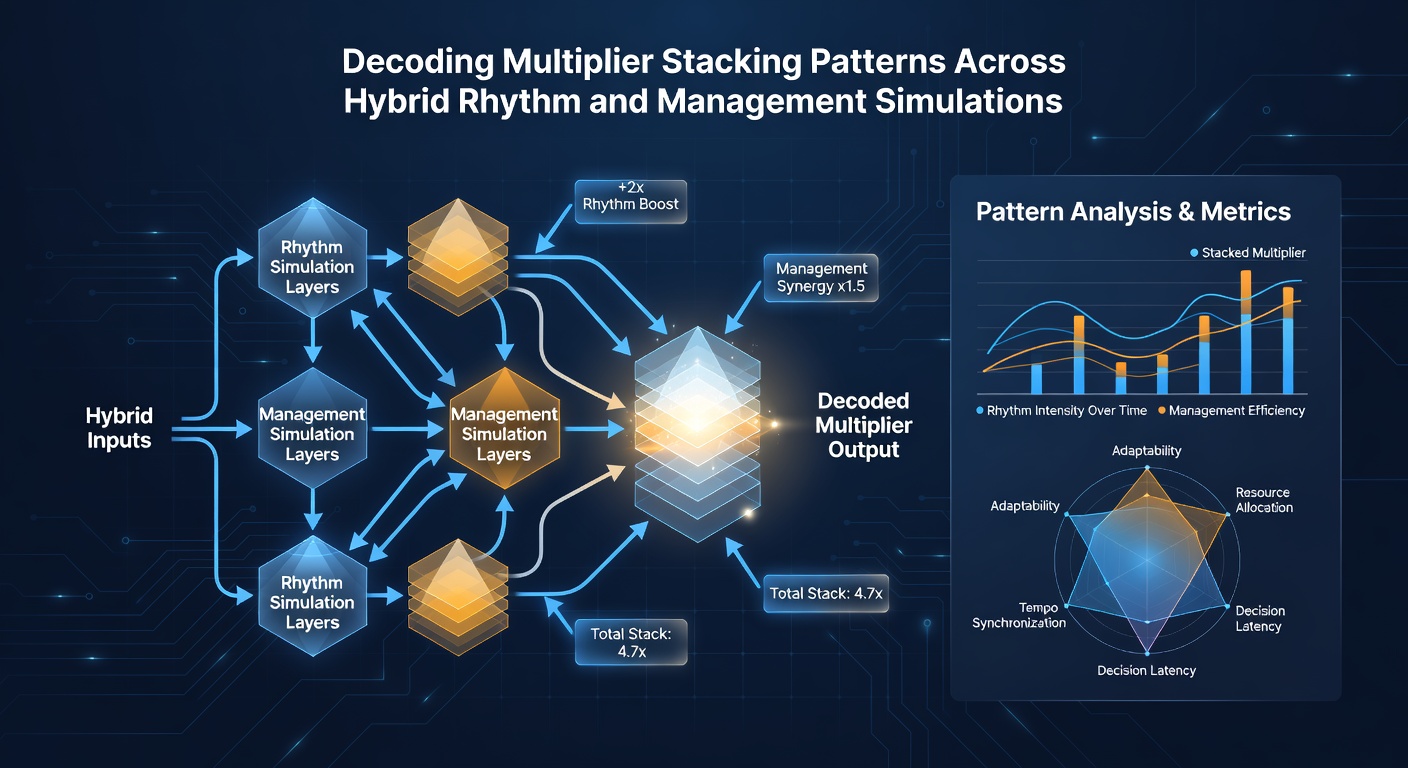
Timing windows narrow during tempo changes, and data indicates that players who pre-load management upgrades before these shifts maintain higher composite multipliers. In May 2026 several titles received patches that adjusted decay timers on management bonuses, extending overlap periods by an average of three seconds according to patch notes released by developers. Those adjustments altered previously established stacking patterns, prompting community analysis threads that catalogued revised optimal sequences for affected games.
Data Sources and Measurement Approaches
Quantitative tracking relies on exported save files and telemetry feeds that record every multiplier application timestamp along with its source layer. Academic teams at institutions in Japan and Australia have developed open-source parsers that reconstruct stacking histories from these logs, allowing precise measurement of composite values at each frame. The European Games Federation published guidelines in early 2025 recommending standardized logging formats so cross-title comparisons become feasible without proprietary tools.
These datasets show that successful stacking correlates strongly with preparation phases lasting at least fifteen seconds before rhythm peaks rather than reactive upgrades during active sequences. Players who allocate staff or equipment during lower-intensity sections achieve more consistent overlap, resulting in fewer broken chains across repeated attempts.
Conclusion
Multiplier stacking in hybrid rhythm and management simulations follows measurable interaction rules shaped by decay timers, activation order, and threshold conditions. Continued telemetry collection through 2026 will likely refine these models further as developers introduce new variables and players adapt strategies accordingly.