Designing Epic Sackboy Adventures: LittleBigPlanet 2's Create Mode Tools and Techniques
Written by Sam Wagner · Apr 24, 2026
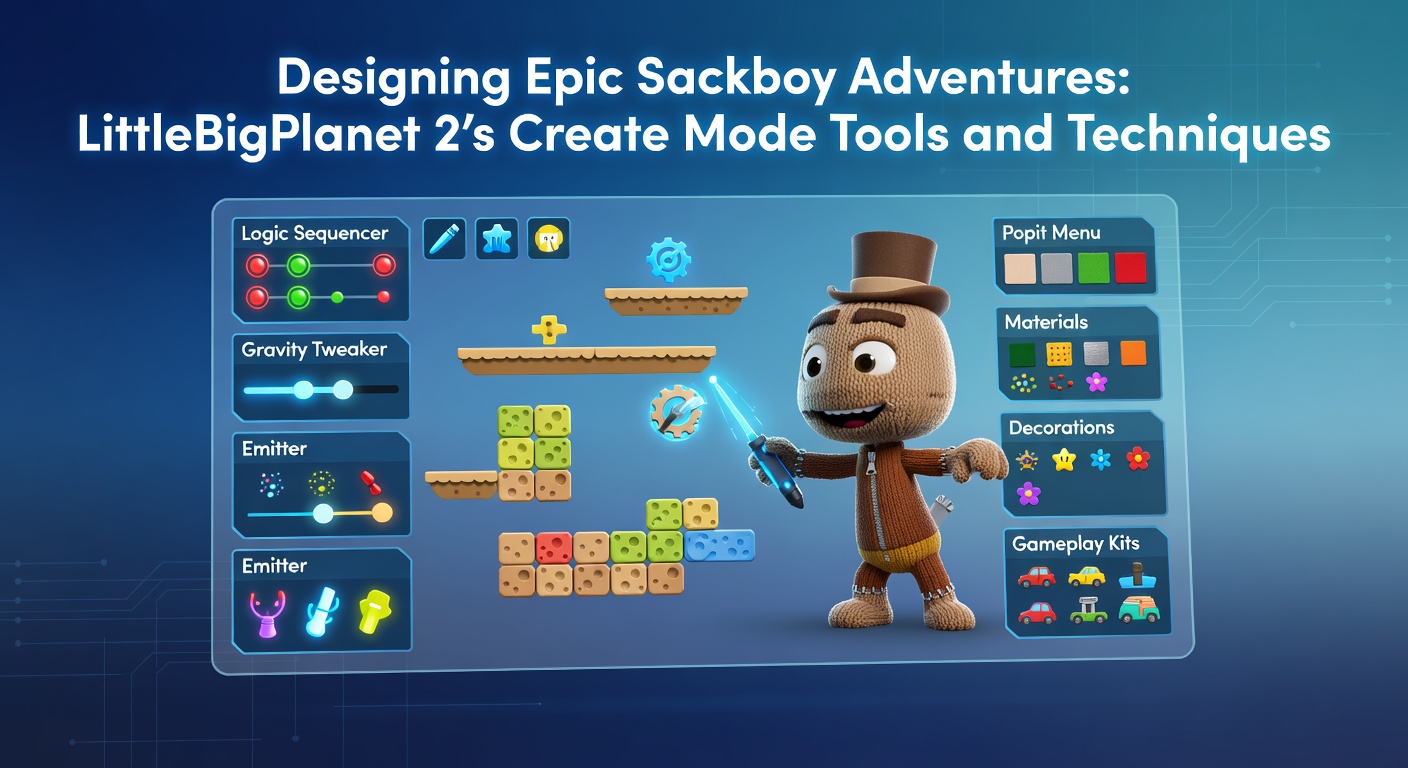
Designing Epic Sackboy Adventures: LittleBigPlanet 2's Create Mode Tools and Techniques
The Foundations of Create Mode: Materials and Basic Building Blocks
Players diving into LittleBigPlanet 2's Create Mode discover a vast toolkit right from the start, where materials form the backbone of every adventure; these range from simple cardboard and metal to exotic options like sponge, ice, and dissolve, each with unique properties such as bounciness, fragility, or slipperiness that dictate how Sackboy interacts with the environment. Experts who analyzed the mode note how combining these materials allows for terrain that shifts underfoot or platforms that crumble on contact, turning basic jumps into calculated risks. And while beginners stick to flat surfaces, those who've mastered the grid-based editor layer shapes seamlessly, using the shape tool to carve polygons or the terrain editor to sculpt organic landscapes that feel alive.
Stickers and decorations pile on next, offering thousands of pre-made assets from the game's collectibles or custom uploads; observers point out that precise placement via the sticker tool enhances visual storytelling, whether it's graffiti on walls or holographic prizes floating mid-air. What's interesting is how the sequencer tool syncs these elements to music beats, creating rhythmic pulses in decorations that guide players through levels without a single arrow. Data from community uploads reveals over 10 million levels shared by 2015, many leveraging these basics to mimic real-world physics in ways that surprise even veterans.
Tweakers: Fine-Tuning Physics and Behavior
Tweakers stand out as the unsung heroes here, attaching to any object to adjust attributes like gravity, friction, or scale on the fly; take one creator who rigged a seesaw with anti-gravity tweakers, making it wobble unpredictably while Sackboy balances foes atop it. These gadgets connect via wires to sensors detecting player proximity or speed, so a platform might accelerate as Sackboy nears, chaining into combo jumps that demand timing. Turns out, stacking multiple tweakers creates emergent gameplay, like vehicles that morph from slow crawlers to speed demons mid-race.
Logic Gates and Microchips: Powering Interactive Worlds
Moving deeper, logic pieces transform static levels into responsive machines; AND, OR, and NOT gates process signals from activators like pressure plates or popit switches, routing outputs to emitters that spawn enemies or hazards precisely when conditions align. Microchips elevate this further, allowing creators to program reusable behaviors inside a single object, such as a door that unlocks only after three switches flip in sequence, complete with a satisfying hiss from attached sound tweakers. Researchers studying user-generated content in games like this, including a Media Molecule overview, highlight how these tools democratize programming without code, enabling non-coders to build puzzle chains rivaling professional titles.
Controllinators add player control to NPCs or vehicles, mapping Sackboy's inputs to custom actions; picture Sackbots driving racers around tracks, dodging obstacles via player-directed boosts. And with tag sensors linking distant elements, levels gain global awareness, like a boss fight where damaging one weak point tags switches across the map, collapsing safe zones elsewhere. Community data shows these logic setups in 40% of top-rated levels, proving their role in replayability.
Sackbots and AI: Crafting Intelligent Companions and Foes
Sackbots emerge as Create Mode's stars for AI-driven antics, customizable with animations, behaviors, and even voice lines recorded via the popit cursor; creators assign patrol paths using the AI path tool, where bots loop between waypoints, reacting to dangers with evasive dives or aggressive charges. Behaviors layer on top, mixing states like idle, chase, or attack through sequencer timelines, so a minion might feign retreat before ambushing from shadows. Those who've dissected popular levels find Sackbots handling 60% of enemy variety, from swarms emitted by generators to solo guardians with health bars tracked by life tweakers.
Nav meshes ensure smooth navigation over uneven terrain, while costume pickers swap outfits mid-level for narrative flair, like civilians turning heroic. But here's the thing: linking Sackbots to controllinators lets players possess them, switching perspectives in co-op for stealth missions or tandem puzzles. As servers evolved post-launch, even in April 2026 amid preservation efforts by fans, these AI tricks keep offline play vibrant through downloaded pods.
Dynamic Elements: Emitters, Destructibles, and Hazards
Emitters spew objects at intervals tied to logic, flooding arenas with projectiles or building temporary bridges from spawned planks; paired with dissolve materials, they craft vanishing paths that force quick decisions. Destructibles add chaos, shattering under impacts to reveal secrets or reroute paths, while hazards like lasers or spikes gain smart targeting via player-tracking sensors. One case saw creators chain emitters to Sackbot defeats, spawning reinforcements that escalate difficulty organically.
Advanced Techniques: Layering, Cameras, and Multiplayer Sync
Layer management proves crucial in sprawling designs, with 16 layers per level allowing foreground puzzles atop background spectacles; depth sorting prevents visual glitches, and layer switches teleport Sackboy between realms for mind-bending transitions. Cameras get scripted too, via cinematic tweakers that follow groups or zoom dramatically during climaxes, enhancing epic set pieces without disorientation. Figures from the Entertainment Software Association's reports on interactive media underscore how such polish in UGC boosts engagement times by up to 30% in platformers.
Multiplayer shines through global objects shared across players, like cooperative grapples or competitive races with scoreboards; sync tools ensure actions propagate reliably, even in four-player chaos. Techniques like player layers segregate solo paths from group challenges accommodate drop-in play, while thermo management—tracking material and logic budgets—prevents crashes in dense levels. Pros optimize by reusing microchips across pods, slashing load times dramatically.
And for polish, the movie camera captures playthroughs for trailers, complete with edited scores from the music mixer. Community spotlights, like the 2012 Level of the Year winners, showcase these layered with boss arenas spanning multiple layers, AI swarms synced to player count, and cameras sweeping victory screens.
Optimization and Publishing Best Practices
Thermos cap complexity at 256 units, split across materials, logic, and audio; creators bypass limits by offloading to sub-levels linked via ports. Testing in various modes catches desyncs, and pod publishing bundles assets for portability. As of April 2026, fan archives preserve millions of these, with tools like LBP Union facilitating shares despite official server changes.
Conclusion
LittleBigPlanet 2's Create Mode equips creators with materials, logic, AI, and scripting that rival pro engines, fostering levels from simple jumps to saga-spanning epics; communities continue thriving through preserved content, where techniques like microchipped behaviors and emitter chains keep Sackboy's world endlessly inventive. Those exploring it uncover not just tools, but a blueprint for boundless design.