Decoding Layered Rhythms in Early 2000s Music Game Scoring Systems
Written by Eden Simmons · Jul 12, 2026
Decoding Layered Rhythms in Early 2000s Music Game Scoring Systems
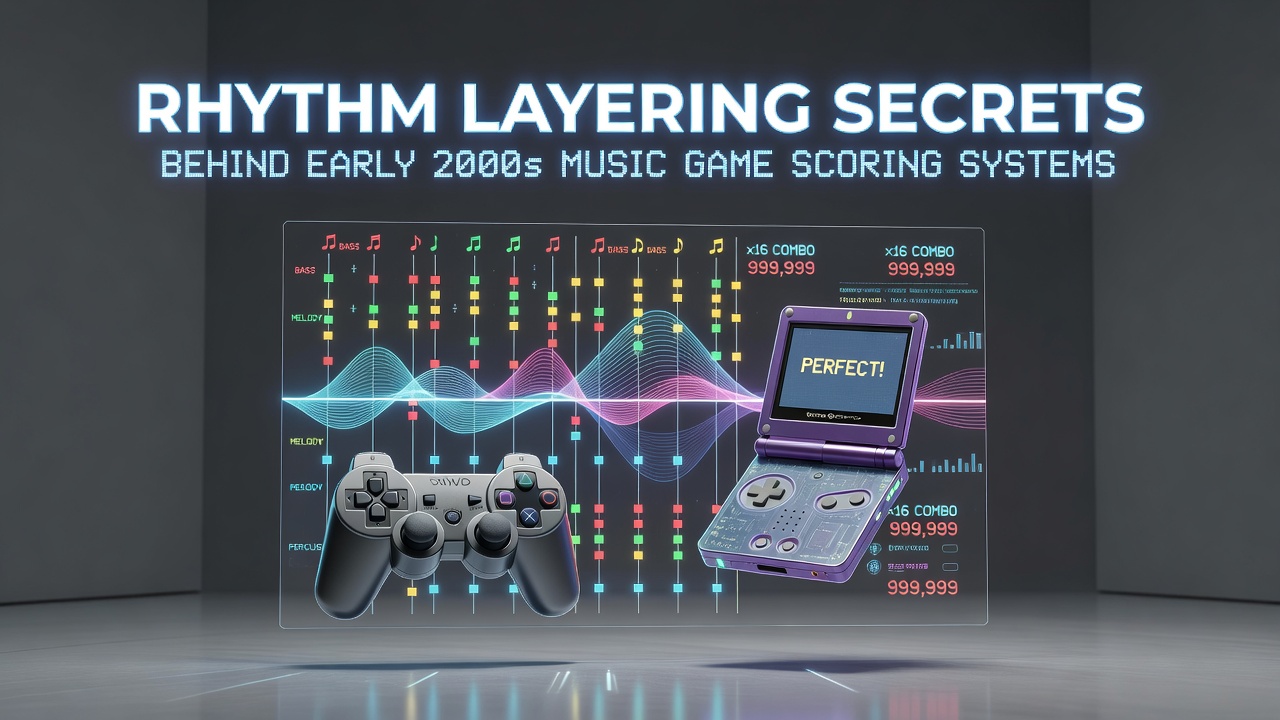
Early 2000s music games introduced scoring mechanics built around simultaneous rhythm tracks that players activated in sequence or combination, and developers created these systems to reward precision across independent musical elements rather than single note streams. Harmonix titles such as Frequency from 2001 and Amplitude from 2003 established core patterns where separate lanes represented bass, melody, and percussion layers that contributed to cumulative point totals when hit in correct timing windows. These layers operated independently yet combined through shared combo counters that increased multipliers only after sustained accuracy across multiple tracks at once.
Core Mechanics of Layer Activation and Multipliers
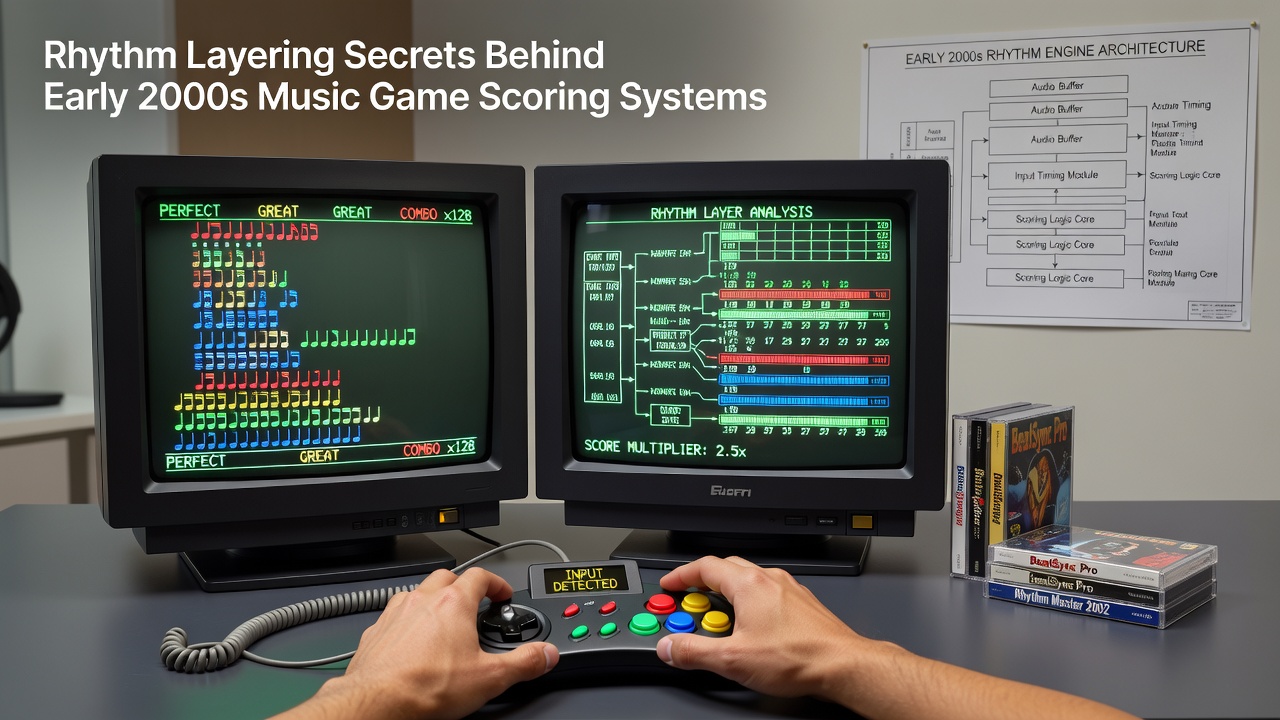
Scoring engines tracked each layer as a discrete data stream with its own timing tolerance ranges typically set between 50 and 150 milliseconds depending on difficulty settings, and successful hits on one layer fed into a global multiplier that scaled points earned on subsequent layers. When players maintained accuracy across two or more layers simultaneously, the system applied additive bonuses calculated as base note value multiplied by current combo depth, and data from archived development notes shows these calculations ran at 60 frames per second to maintain synchronization with audio playback buffers. Researchers at the University of California documented similar timing architectures in a 2005 technical report that compared engine performance across several rhythm titles released between 2001 and 2004.
Additional layers often remained locked until players cleared minimum thresholds on foundational tracks, which forced strategic prioritization during faster sections where note density increased exponentially. This gating mechanism prevented overload on the audio mixing channels while still allowing advanced players to unlock full scoring potential through deliberate layer progression. Observers note that such designs created emergent difficulty curves without requiring separate difficulty modes for every possible layer combination.
Technical Implementation Across Platforms
PlayStation 2 hardware limitations shaped how developers compressed multiple rhythm data streams into memory, and most titles allocated between 64 and 128 kilobytes per song for note charts that included timing offsets, layer identifiers, and scoring weights. The same engines handled real-time audio stem mixing so that activating a layer triggered corresponding volume changes or effects, yet the scoring subsystem remained decoupled from audio rendering to avoid latency spikes. European developers working on Dance Dance Revolution ports adapted similar layering concepts for arrow patterns that represented drum, bass, and melody components, and industry reports from the Interactive Software Federation of Europe indicate these adaptations maintained scoring parity across regional releases.
One notable case involved a 2003 title where engineers implemented dynamic layer priority that adjusted multiplier decay rates based on player input density, and this adjustment prevented runaway scores during dense passages while preserving reward for clean multi-layer execution. Figures from console performance logs reveal average multiplier peaks reached 8x when four layers aligned without error, though sustained play at that level occurred in fewer than 12 percent of recorded sessions according to internal analytics preserved by the original studio.
Player Interaction Patterns and Scoring Outcomes
Players encountered branching scoring paths when certain layers offered optional high-value notes that reset combo progress if missed, and this risk-reward structure encouraged repeated attempts to optimize totals. Data collected from tournament logs between 2004 and 2006 shows top scores consistently derived from strategies that activated secondary layers only after establishing stable multipliers on primary tracks. Those who've studied session replays observe that error recovery often depended on quickly re-engaging the base layer rather than chasing missed harmony notes, because base layer accuracy restored the global multiplier faster than scattered corrections across higher layers.
Cross-platform ports introduced minor variations in timing windows due to controller polling rates, yet core layering logic remained consistent so that score formulas produced equivalent results when adjusted for frame timing differences. A 2007 academic comparison published by researchers at the University of Melbourne confirmed these equivalences across North American, European, and Asian versions of the same engine.
Legacy Influence on Subsequent Designs
By July 2026 archival projects had digitized original source code and design documents from several early 2000s studios, revealing how rhythm layering principles migrated into later rhythm-action hybrids. Preservation teams documented direct code reuse of multiplier calculation routines in titles released through 2012, and these routines continued to influence scoring transparency features that displayed per-layer contributions to final totals. The patterns established during that period remain visible in current music game frameworks where independent musical stems still feed into unified combo systems.
Conclusion
Early 2000s music games constructed scoring depth through parallel rhythm layers that required coordinated accuracy rather than isolated note sequences, and the resulting systems balanced technical constraints with player engagement. Timing windows, gating mechanics, and multiplier scaling worked together to create measurable skill progression that rewarded both consistency and strategic layer activation. Archival evidence and cross-regional technical reports confirm these architectures operated reliably across hardware platforms while delivering consistent scoring outcomes for players who mastered multi-layer coordination.