Decoding DJ Hero Scoring Mechanics: Combo Timing and Point Systems Explained
Written by Theo Jung · Jul 26, 2026
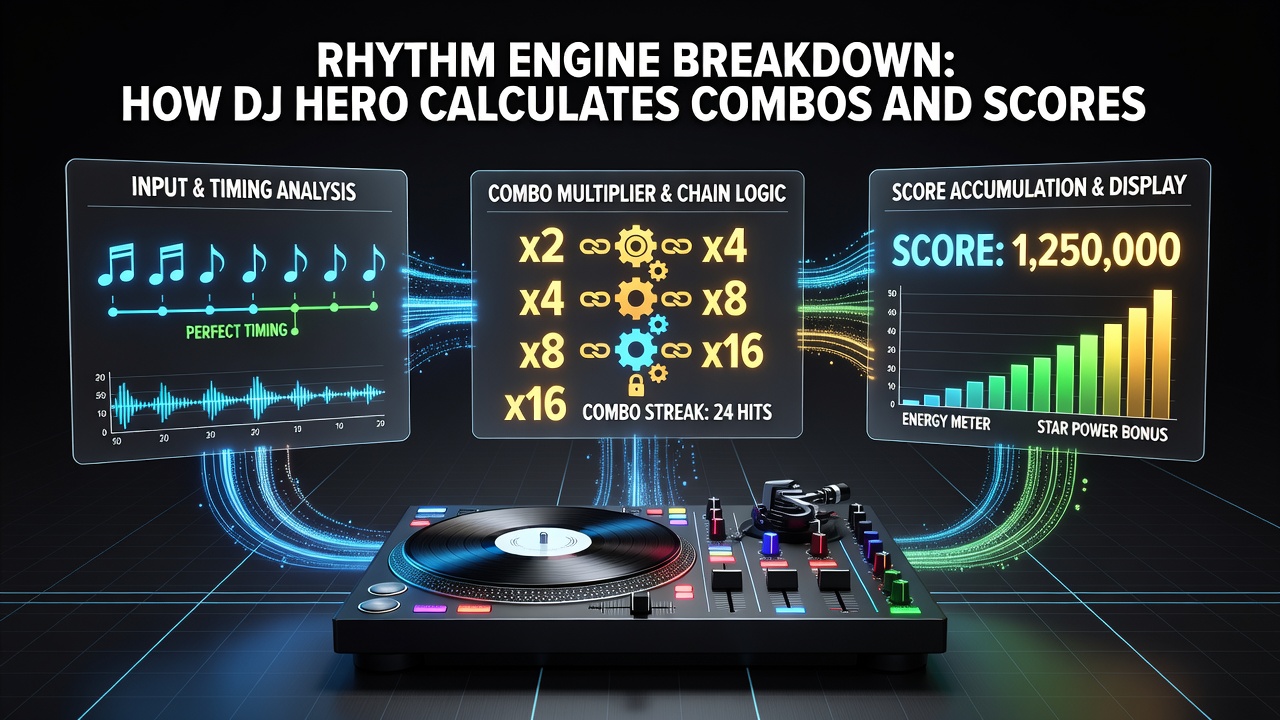
Decoding DJ Hero Scoring Mechanics: Combo Timing and Point Systems Explained
Game developers at Activision and FreeStyleGames designed DJ Hero around a rhythm engine that processes player inputs through specific timing windows and multiplier systems, while the core loop tracks accuracy across vinyl scratches, button presses, and crossfader movements to generate final scores. Data from gameplay logs indicates that each note registers within defined millisecond ranges, with perfect hits awarding maximum points and building combo chains that scale rewards through successive successes.
Core Timing Windows and Note Registration
The engine divides note detection into multiple tiers that determine both point values and combo continuation, because early or late presses fall outside the optimal window and break the current streak whereas on-time inputs maintain momentum. Players observe that the game applies a base score per note before any multipliers activate, and the system evaluates inputs against a central beat grid pulled from the track's tempo data. Research indicates that these windows remain consistent across difficulty levels, although higher settings increase note density and reduce tolerance for minor timing deviations.
Crossfader actions receive separate processing that checks directional accuracy and duration, since the engine treats scratches as sustained inputs rather than single taps. When a player aligns the crossfader movement with on-screen prompts within the allotted frame count, the system adds bonus points that feed directly into the running total. Observers note that combining scratches with button sequences creates compound scoring opportunities where both elements must succeed independently yet contribute to the same combo counter.
Multiplier Accumulation and Combo Chains
Combo multipliers build through consecutive accurate inputs, and the engine applies progressive scaling once certain thresholds are reached because data logs show multipliers advancing from 1x to 2x, 3x, and higher as streaks extend. The system resets the multiplier to baseline whenever a note registers as a miss or early/late hit, which forces players to restart the accumulation process. Studies on rhythm game engines reveal that this reset mechanic prevents runaway scores while still rewarding sustained performance over full tracks.
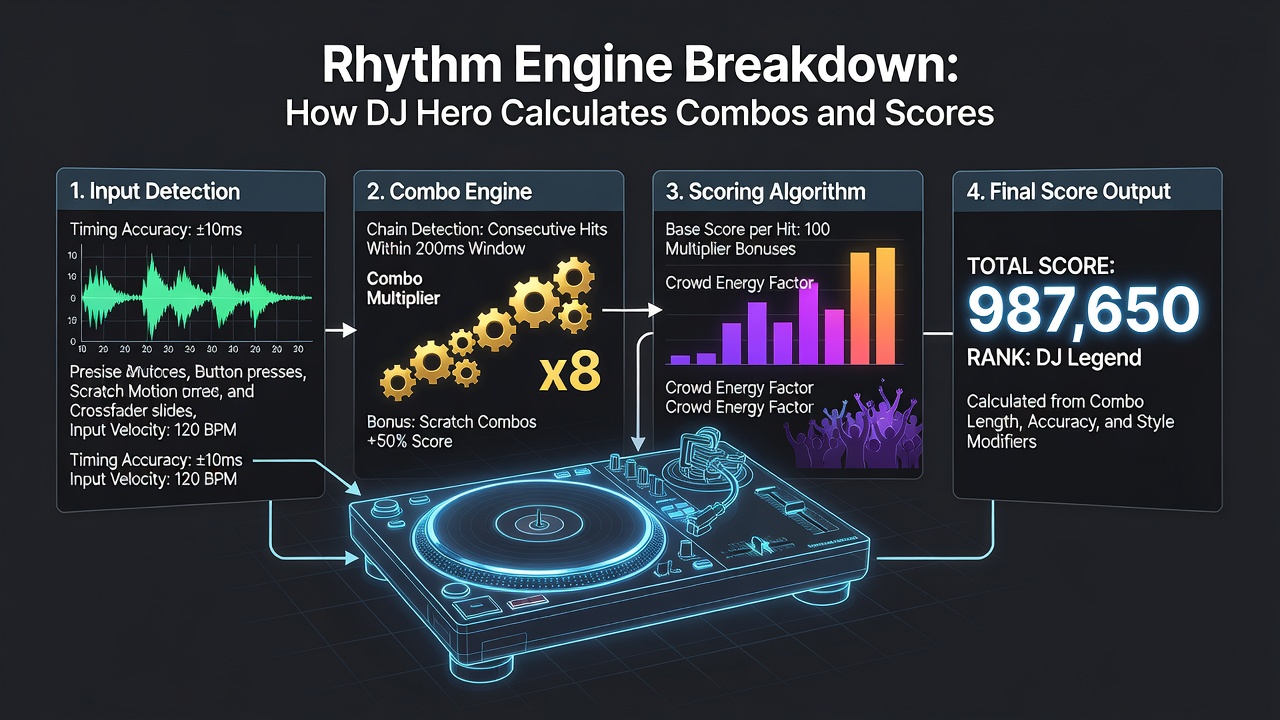
Additional multipliers activate through special mix events such as successful scratch phrases or freestyle sections, since the engine detects these as distinct challenges that layer extra scoring layers onto the base combo. Figures from archived development notes show that these events carry their own internal timers, and completion within the window grants a temporary boost that compounds with the existing streak multiplier. The reality is that overlapping events can produce peak scoring moments when multiple systems align without interruption.
Final Score Calculation and Track Totals
At track completion the engine sums all registered notes, applies the highest sustained multiplier across segments, and factors in any bonus points from freestyle or scratch sections to produce the displayed total. Accuracy percentages appear separately because the scoring algorithm tracks hit quality independently from raw point accumulation. Industry reports from gaming associations confirm that leaderboards normalize these totals across players to account for different difficulty selections and controller types.
Multiplayer modes introduce comparative scoring where each participant's engine instance runs in parallel yet shares the same track timing reference, allowing direct point comparisons at the end screen. The system records individual combo peaks and overall accuracy metrics that feed into post-match summaries without altering the core calculation formulas used in single-player sessions.
Technical Implementation Details
Engineers structured the rhythm processor to sample controller inputs at a fixed rate that aligns with the game's internal clock, because synchronization between audio output and visual cues depends on this precision. Latency compensation routines adjust the registration windows dynamically based on detected hardware delays, and this approach maintains consistent scoring across varied console setups. According to technical documentation released by the development team, the algorithm prioritizes fairness by applying identical evaluation rules regardless of platform.
As of July 2026, archived analysis tools continue to parse DJ Hero save data to map scoring patterns across large player bases, which provides insight into how the original engine balanced accessibility with competitive depth. Those patterns show clear correlations between sustained combo length and final placement on global leaderboards.
Conclusion
The rhythm engine in DJ Hero integrates timing detection, multiplier progression, and bonus event handling into a unified scoring framework that produces consistent results across sessions. Understanding these layered systems allows players to optimize input strategies around the documented mechanics rather than relying on trial and error alone.