Custom Creations Sustaining Platformer Player Engagement Over Time
Written by Olivia Washington · Aug 23, 2026
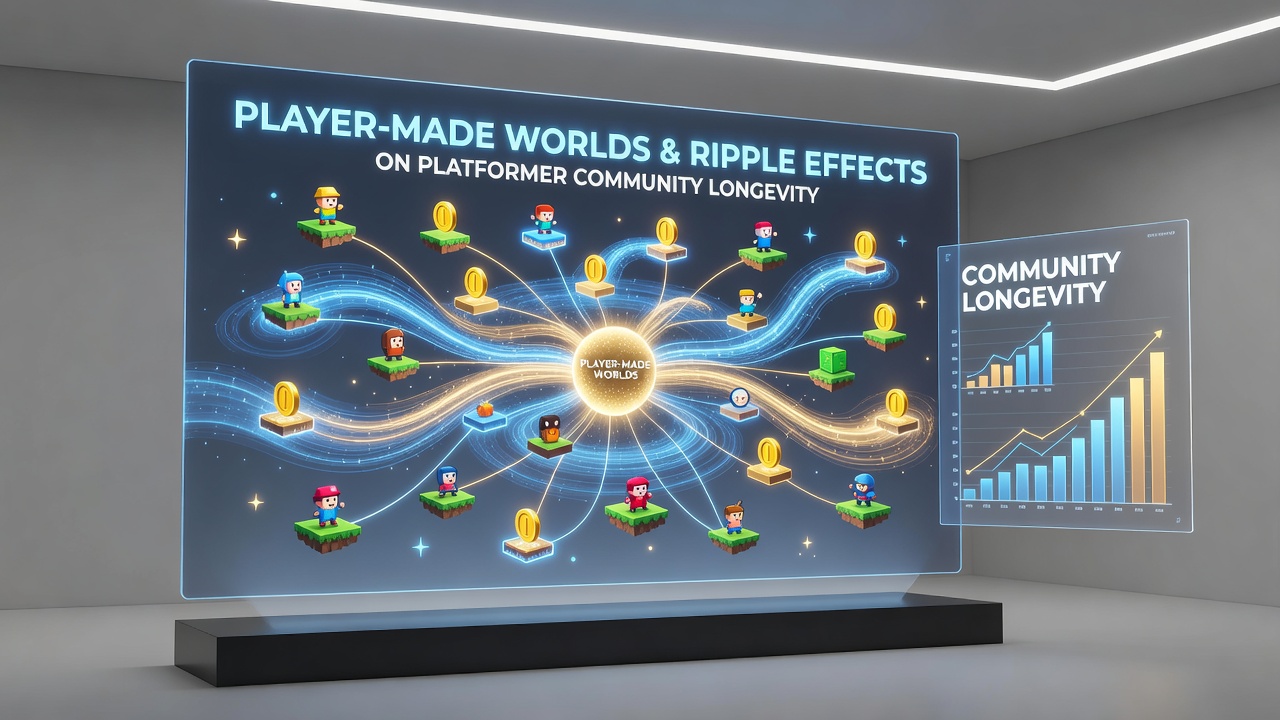
Custom Creations Sustaining Platformer Player Engagement Over Time
Player-made worlds in platformer games have expanded beyond simple level editors into full ecosystems where creators share stages, mechanics, and entire campaigns that keep participants returning for years. Data from industry tracking shows that titles supporting robust creation tools maintain active user bases long after initial sales peaks, as new content arrives continuously from the community itself. Researchers at academic institutions have documented how these contributions create feedback loops that encourage both novice and veteran players to experiment, upload, and collaborate without requiring official updates from developers.
Mechanics Behind Persistent Activity
Platformers equipped with accessible creation suites allow users to build stages that incorporate existing assets while introducing new challenges, and this flexibility has led to measurable retention patterns. Studies conducted by university teams in Canada indicate that games with integrated sharing features see upload volumes increase steadily over multi-year periods, whereas titles lacking such tools experience sharper drops in concurrent players. Observers note that the ability to remix popular community stages further amplifies participation, since each new creation often inspires derivative works that keep discussion threads and leaderboards alive across months and seasons.
Those who've examined server logs from major platformer franchises report that daily active creators frequently outnumber casual consumers during off-peak release windows, and this dynamic shifts the overall lifespan of the product. In August 2026, several long-running platformer communities recorded their highest monthly upload counts in five years, driven by seasonal events where players organized collaborative build challenges. The pattern demonstrates that content generated internally reduces reliance on publisher support and extends relevance well beyond standard support cycles.
Community Structures That Emerge
Online forums, Discord servers, and dedicated wikis form around these player worlds, turning isolated creations into shared libraries that new arrivals can explore immediately. Industry reports from the Entertainment Software Association highlight how such networks foster skill transfer, with experienced builders mentoring others through tutorials and template packs that lower entry barriers. The result appears in sustained event participation, where tournaments built entirely on community stages draw consistent attendance without external prize pools or marketing campaigns.
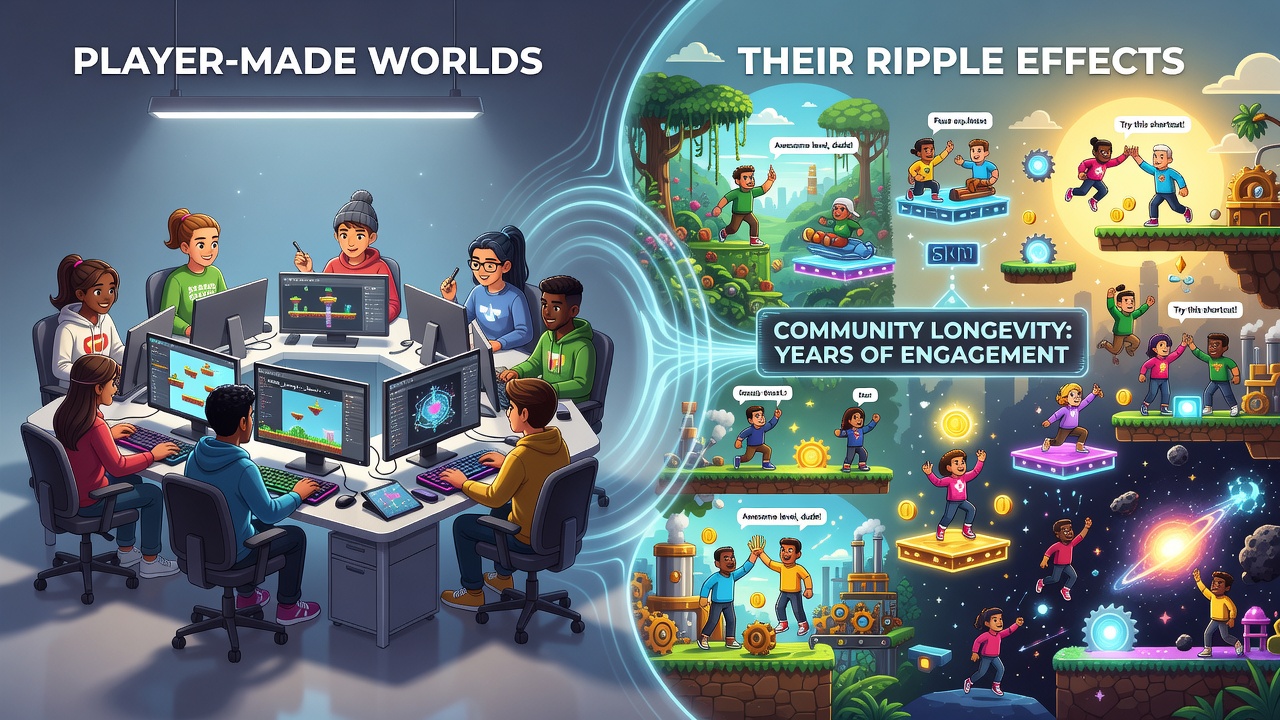
Geographic distribution of creators also broadens as tools become more intuitive, with contributors from varied regions adding cultural influences to level design that official developers might not prioritize. European research groups have tracked how language-specific subcommunities translate instructions and share localized assets, thereby increasing the total volume of available content. These parallel developments create redundancy that protects against any single platform outage or policy change, since multiple hosting options and backup archives keep popular stages accessible.
Measurable Effects on Longevity
Longitudinal data collected by independent research organizations reveals that platformers with active creation scenes retain measurable percentages of their original player counts for longer intervals than comparable games without such features. Metrics include average session length, number of distinct creators per month, and cross-platform migration rates when new hardware arrives. Communities that archive older stages alongside newer ones allow veterans to revisit historical builds, which in turn introduces those works to younger participants and maintains a living record of design evolution.
Platform operators have adjusted their infrastructure investments in response, allocating server resources toward user-generated content delivery rather than solely toward official multiplayer matches. This reallocation supports higher concurrent editing sessions and faster sharing pipelines, further accelerating the cycle of creation and consumption. Figures compiled through academic partnerships demonstrate that the presence of even modest curation systems correlates with extended periods of positive review momentum on storefronts, as fresh stages provide ongoing reasons for players to recommend the title to others.
Future Trajectories Observed
Emerging integration of cloud-based editing environments continues to lower technical requirements, enabling participation from devices that previously lacked sufficient processing power. Analysts following these developments note that cross-game asset portability experiments have begun in smaller communities, allowing stages built in one platformer to influence designs in another. Such interoperability expands the overall addressable audience and reduces fragmentation that might otherwise shorten individual game lifespans.
Regulatory bodies in Australia and the European Union have issued guidance on user-generated content moderation that affects how platforms host and promote these worlds, yet the core activity of creation persists across compliant systems. The documented outcome remains an extended relevance window for platformer franchises that successfully nurture their creator bases rather than treating them as secondary features.
Conclusion
Player-made worlds function as renewable resources that replenish engagement metrics and social connections within platformer communities, with quantitative evidence showing prolonged activity across multiple release generations. Continued evolution of creation tools and hosting practices sustains this effect, as communities adapt their workflows to new hardware and distribution methods while preserving archives of earlier contributions. The ripple effects manifest in stable player counts, diversified content libraries, and reduced dependence on official development cycles, establishing a self-reinforcing structure that supports longevity without requiring constant external intervention.