Chain Building Secrets: Multiplier Strategies and Progression Paths in Modern Rhythm Music Games
Written by Eden Simmons · Jun 17, 2026
Chain Building Secrets: Multiplier Strategies and Progression Paths in Modern Rhythm Music Games
Modern rhythm music games reward precise timing and sustained performance through intricate chain systems that build scores exponentially when players maintain accuracy over sequences of notes; these mechanics appear across titles ranging from dance pads to virtual reality experiences and guitar controllers. Developers design chain building around core loops where consecutive successful inputs increase both point values and visual feedback, creating tension that peaks during extended passages. Data from industry reports shows participation in rhythm genres has remained steady through platform transitions, with players often returning for competitive leaderboards and personal best tracking.
Core Elements of Chain Construction
Chain length depends on unbroken sequences of hits, and most games reset progress on any miss while offering brief windows for recovery in certain modes. Players advance through difficulties by learning note patterns that favor specific input orders, such as alternating frets or synchronized limb movements. Studies on player behavior indicate those who practice segmented sections achieve longer chains faster than those attempting full tracks repeatedly, since muscle memory develops through repetition of isolated phrases. Visual cues like pulsing lanes or color shifts help maintain focus during high-density sections where multiple simultaneous inputs test coordination limits.
Multiplier Systems and Scoring Layers
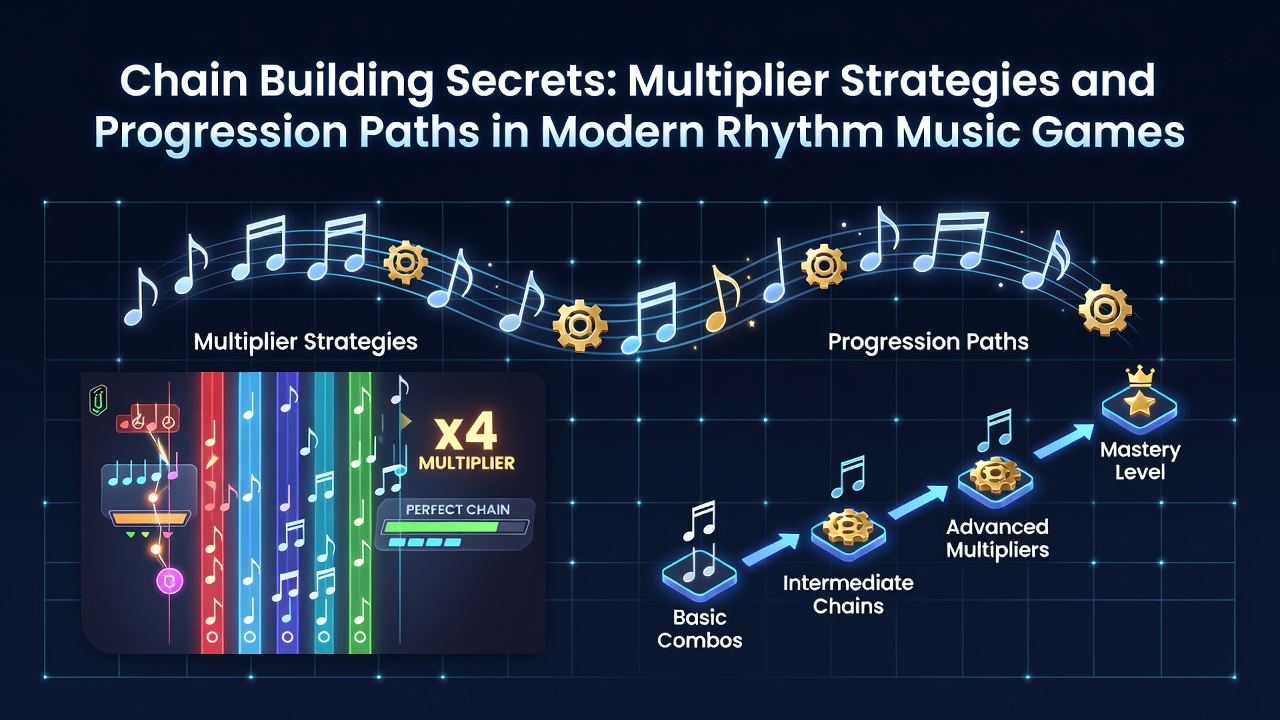
Multipliers activate after reaching thresholds, commonly doubling or tripling base points once chains hit 10, 20, or 50 consecutive successes, though some titles layer additional bonuses for perfect timing within narrow windows. These systems compound further when players collect items or maintain separate meters that feed into global score multipliers. Research compiled by the Entertainment Software Association highlights how competitive communities analyze frame data to optimize input timing, turning what appears as simple button pressing into layered optimization problems. Progression often ties directly to multiplier milestones, unlocking higher difficulty charts only after consistent performance on lower settings demonstrates mastery of basic chain maintenance.
Pathways Through Game Content
Modern rhythm titles structure advancement around tiered song lists, career modes, and customization trees that open new tracks or cosmetic options after accumulating chain-related achievements. Some games feature branching paths where players choose between accuracy-focused routes that emphasize long chains and speed routes that prioritize rapid note streams with shorter but denser combos. Observers note that seasonal events scheduled around mid-year periods, including June 2026 updates for several live-service rhythm platforms, frequently introduce limited-time multipliers that accelerate progression for returning players. These events integrate community challenges where collective chain totals determine shared rewards, blending individual skill with group participation metrics.
Players navigate these paths by balancing practice time across multiple input devices, since controller type influences chain stability; motion controls in virtual reality versions demand different spatial awareness than traditional button layouts. Data gathered from platform analytics reveals higher retention rates among users who gradually increase difficulty while tracking personal chain statistics through built-in replay tools. External resources such as those published by the Interactive Games and Entertainment Association provide regional breakdowns of engagement patterns, showing distinct preferences for chain-heavy gameplay in certain markets.
Applied Techniques Across Titles
Specific implementations vary yet share foundational principles. In controller-based games, holding sustained notes while hitting interspersed taps preserves chain momentum, whereas rhythm boxing hybrids require positional resets between strikes to avoid input conflicts. Virtual reality entries add depth through full-body tracking that registers weight shifts as additional scoring layers, extending possible chain lengths when posture remains consistent. Tournament data indicates top performers rehearse transition points where multipliers reset or change, treating those moments as critical junctures rather than automatic continuations. Community resources often catalog optimal calibration settings per hardware configuration, reducing input lag that otherwise breaks chains at higher tempos.
Conclusion
Chain building and multiplier strategies form the backbone of engagement loops in contemporary rhythm music games, guiding players from introductory charts toward advanced content through measurable performance thresholds. Progression systems reward sustained accuracy with expanded libraries and competitive standing, while live updates continue to refine these mechanics for broader audiences. Those examining scoring data across platforms find consistent patterns where incremental improvements in chain management yield disproportionate score gains, underscoring the mathematical elegance underlying seemingly straightforward rhythm interactions.