Breaking Down Score Mechanics in Rhythm Music Gaming Platforms
Written by Theo Jung · Aug 5, 2026
Breaking Down Score Mechanics in Rhythm Music Gaming Platforms
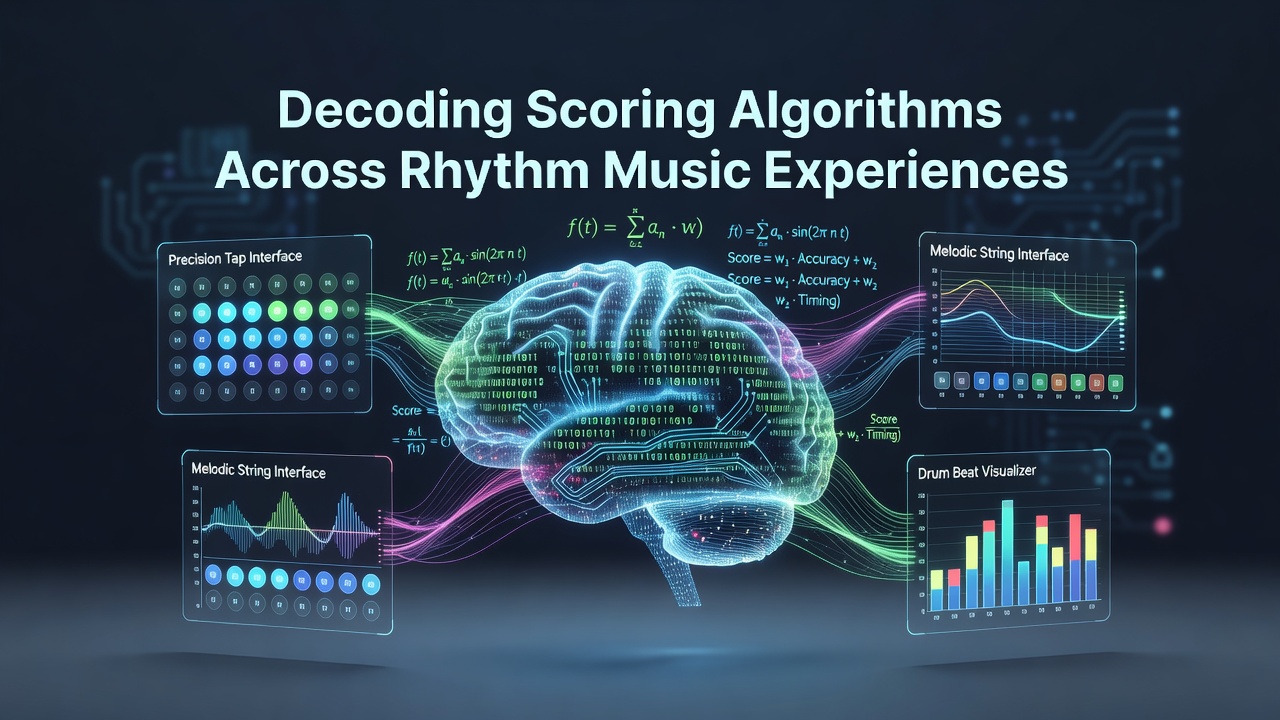
Scoring algorithms in rhythm music experiences rely on precise timing detection combined with layered multiplier systems that reward consistency over isolated successes, and developers calibrate these elements across multiple difficulty tiers to balance accessibility with competitive depth. Players hit notes within defined time windows that range from perfect hits at the center to good or miss outcomes at the edges, while data from industry reports shows these windows typically span 20 to 100 milliseconds depending on the title and setting.
Core Timing and Accuracy Layers
Engineers build the foundation around millisecond-precise input recognition where each note registers based on proximity to its target beat, and this creates a hierarchy of scores that feed into overall performance metrics like percentage accuracy or letter grades. Studies from institutions in Australia indicate that tighter windows on higher difficulties demand sub-30 millisecond precision for top ranks, whereas beginner modes expand those ranges to encourage learning without frustration. Combo chains further amplify points when consecutive hits maintain the streak, yet one miss resets the multiplier and forces recovery through sustained accuracy on subsequent notes.
Multiplier Systems and Combo Dynamics
Multipliers grow exponentially with unbroken sequences in many platforms, starting at 1x and climbing toward 4x or higher after 50 or 100 consecutive successes, although certain experiences cap these at specific thresholds to prevent runaway scores on lengthy tracks. Research from Canadian academic sources highlights how games integrate secondary bonuses for hitting special markers or completing freestyle sections, and these additions compound the base timing score without altering the core detection logic. Observers note that players who maintain high multipliers across entire songs often achieve totals several times higher than those with frequent breaks, even when raw accuracy percentages remain similar.
External factors such as song tempo and note density also influence effective scoring because faster sections compress the available reaction time and increase the chance of edge-case timing errors. Developers adjust for this by varying note speeds independently of the audio track, which allows the algorithm to maintain consistent difficulty perception regardless of musical pace.
Difficulty Scaling and Adaptive Elements
Difficulty modes modify the underlying parameters rather than overhauling the algorithm itself, and this approach lets one codebase support casual play alongside professional tournaments. Higher settings shrink timing windows, raise the multiplier ramp speed, and introduce more complex note patterns like simultaneous presses or holds that require sustained input registration. Figures from European gaming associations reveal that adaptive systems in some modern titles even adjust window sizes mid-song based on detected player performance trends, though these changes stay transparent to avoid perceptions of manipulation.
Score calculation formulas typically follow a weighted sum where base note value multiplies by timing accuracy factor and current combo level before any global modifiers apply at the end. This structure ensures early performance sets the trajectory while late recovery remains possible but limited in impact. As of August 2026 several platforms have introduced cross-game leaderboards that normalize scores across different rhythm titles using shared calibration data, allowing direct comparisons between experiences that once operated in isolation.
Comparative Analysis Across Platforms
Variations appear when comparing dance pad based games to controller or motion tracked ones, since input latency differs and algorithms compensate through calibration offsets measured during setup. Some experiences incorporate life bar mechanics that penalize misses by draining health, and reaching zero ends the song early with a truncated score that reflects incomplete play. Data indicates these systems encourage consistent play over risky high-risk strategies that might yield bigger multipliers but carry higher failure rates.
Industry reports from organizations in the Asia-Pacific region document how mobile rhythm titles adapt these same principles to touch interfaces, replacing physical button timing with swipe or tap detection that accounts for screen response delays. The result maintains comparable scoring depth despite hardware constraints, and leaderboards continue to reflect global performance hierarchies built on identical algorithmic foundations.
Conclusion
Decoding these scoring algorithms reveals a consistent emphasis on timing precision layered with progressive rewards for sustained performance, and the modular design allows endless customization across genres and hardware. Players benefit from understanding how small improvements in accuracy compound through multipliers, while developers refine detection windows and bonus triggers based on aggregated play data to keep engagement balanced. The underlying mathematics stays straightforward yet produces rich strategic layers that evolve alongside new input methods and platform capabilities.