Breaking Down Chain Building and Beat Alignment Mechanics in Contemporary DJ Rhythm Simulations
Written by Theo Jung · Jun 24, 2026
Breaking Down Chain Building and Beat Alignment Mechanics in Contemporary DJ Rhythm Simulations
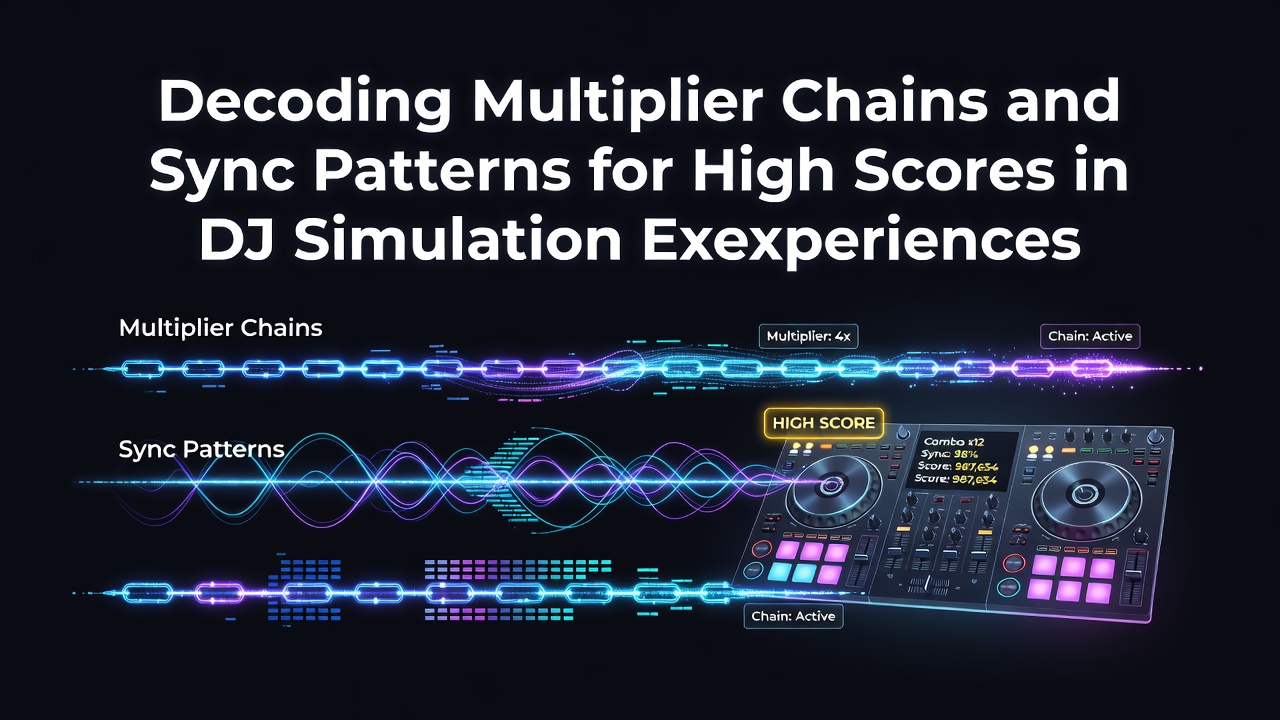
Players encounter multiplier chains as core scoring systems in DJ rhythm simulations where successive accurate inputs build progressive score multipliers, and these chains reset upon missed notes or timing errors according to game design specifications documented across multiple titles released since the late 2000s. Sync patterns refer to the precise alignment of controller inputs with on-screen beat markers and crossfade cues that determine whether each action registers as perfect, good, or missed. Data from industry reports indicates that high-score runs depend on maintaining chain lengths beyond 50 consecutive hits while executing sync patterns that match track-specific BPM ranges between 90 and 140 beats per minute.
Core Mechanics of Multiplier Progression
Multiplier values typically start at 1x and increase by 1x increments after every 10 successful hits in standard mode configurations, though certain titles adjust this threshold based on difficulty settings selected by the user. Research conducted by academic institutions such as those affiliated with the University of Alberta has examined input timing windows in rhythm-based games and found that windows for perfect hits often span 30 to 50 milliseconds on either side of the exact beat marker. Longer chains generate exponential score growth because each subsequent hit applies the current multiplier to its base point value, which means a 10x chain can produce scores more than double those achieved through shorter sequences interrupted by errors.
Observers note that visual feedback elements like glowing chain counters and color shifts on the multiplier display help players track progress without diverting attention from the scrolling note lanes. In June 2026 several simulation platforms are scheduled to release patch updates that introduce variable chain decay rates during sustained play sessions, a change intended to balance scoring across extended tracklists.
Sync Pattern Recognition and Execution
Sync patterns emerge from the combination of single notes, hold notes, and scratch or crossfade actions that appear in sequences dictated by the song's audio waveform. Players identify recurring motifs such as quarter-note clusters followed by off-beat scratches, and these motifs repeat with slight variations across verses and choruses. Evidence from performance analytics shared by gaming associations shows that top-ranked scores consistently feature sync accuracy rates above 95 percent on expert difficulty, where timing tolerances tighten to approximately 20 milliseconds.
Training modes within these simulations provide slowed-down playback options that isolate individual sync segments, allowing repeated practice on problematic patterns without affecting overall chain status. One documented approach involves mapping visual cue colors to specific controller zones so that pattern memory becomes associated with spatial rather than purely temporal recognition.
Integration of Chains and Patterns for Score Optimization
Effective high-score strategies combine sustained multiplier chains with accurate execution of complex sync patterns by prioritizing sections where note density remains moderate enough to preserve chain integrity. When tracks transition into denser passages featuring rapid crossfades, players reduce input speed slightly to maintain timing precision rather than risking chain breaks. Figures released by the Entertainment Software Association of Canada reveal that players who complete full track runs with unbroken chains above 100 hits achieve final scores 40 to 60 percent higher than those who experience two or more resets per song.
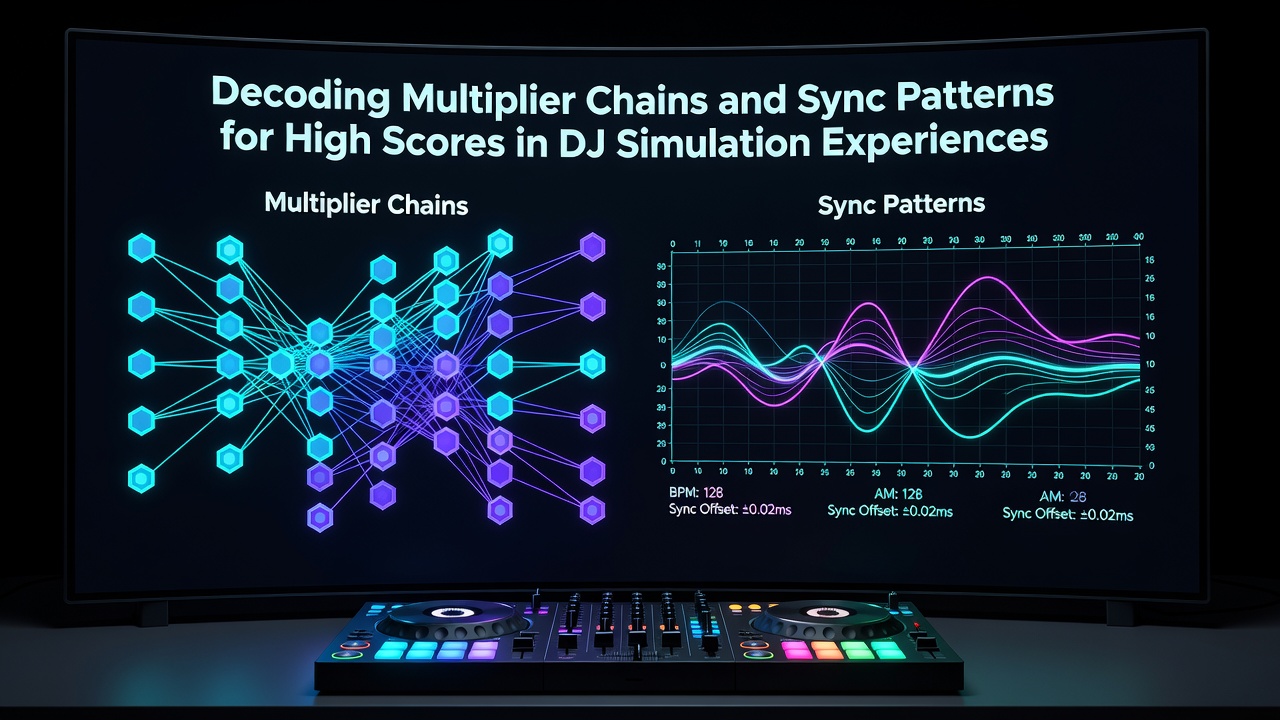
Calibration settings for audio latency play a direct role because even small offsets between controller response and visual markers can shift perfect hits into the good category, thereby stalling multiplier growth. System updates in 2026 are expected to include automatic latency detection routines that adjust timing windows based on hardware configurations reported during initial setup.
Track Structure Influence on Scoring Potential
Each simulated track presents unique structures where chorus sections often contain the highest note density and therefore the greatest scoring opportunities when chains remain active. Verse segments tend to feature simpler sync patterns that serve as recovery zones after difficult passages. Analysts examining leaderboard data observe that optimal song selections pair high-BPM tracks with lower-density follow-ups so that mental focus can reset between attempts at long chains.
Practice routines documented in community resources emphasize looping specific 30-second segments that contain both chain-building opportunities and sync challenges, repeating them until execution consistency reaches 98 percent before advancing to full-song runs. This segmented approach reduces overall session time required to reach competitive scoring thresholds.
Conclusion
Multiplier chains and sync patterns function as interconnected systems within DJ simulation experiences where sustained accuracy produces compounding score advantages. Players who master pattern recognition alongside chain maintenance achieve higher placements on global leaderboards, and ongoing platform updates scheduled for mid-2026 continue to refine these mechanics through adjustable timing parameters and visual aids. Performance data consistently demonstrates that deliberate practice on isolated segments translates directly into improved full-run results across diverse track libraries.