Algorithmic Scoring in DJ Hero: Effects on Playstyles Across Early Rhythm Game Series
Written by Theo Jung · Aug 7, 2026
Algorithmic Scoring in DJ Hero: Effects on Playstyles Across Early Rhythm Game Series
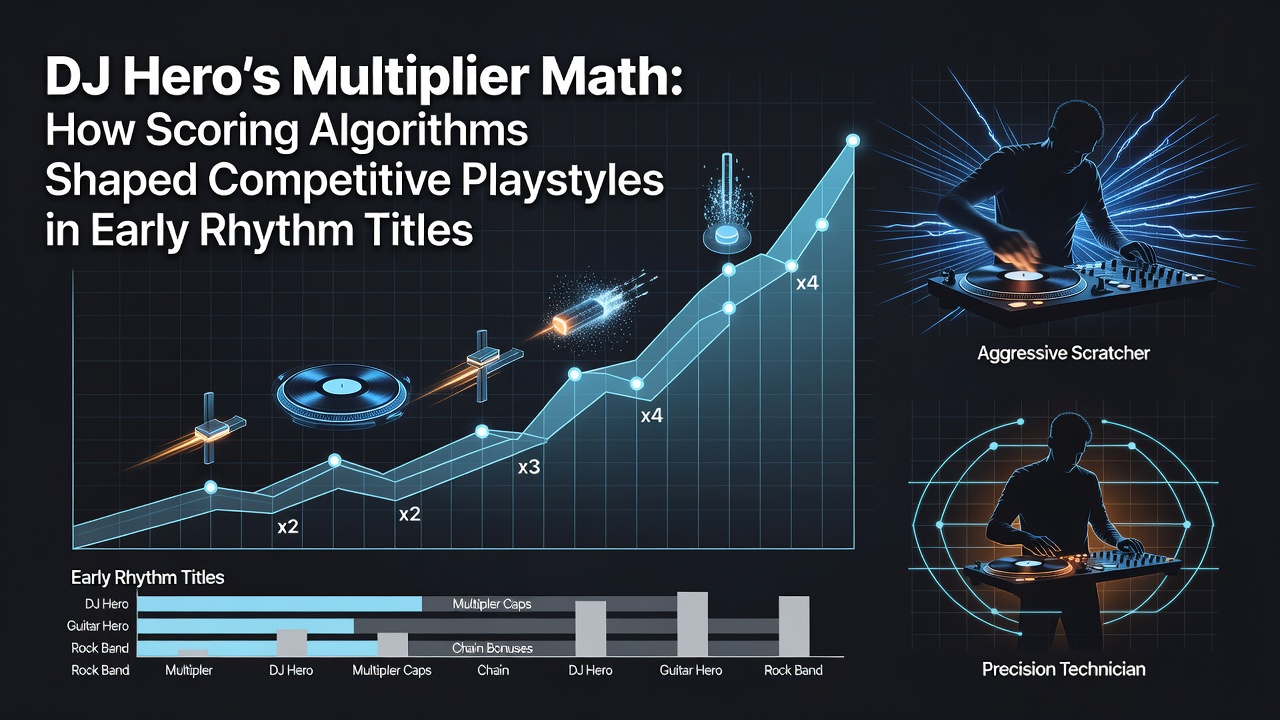
Scoring algorithms in DJ Hero relied on layered multipliers that rewarded sustained accuracy, beat matching precision, and successful mashup transitions while penalizing misses through rapid decay, and these mechanics built directly on systems introduced in earlier rhythm titles such as Dance Dance Revolution and Guitar Hero. Players accumulated base points for each correctly timed input yet saw totals escalate when consecutive hits maintained a streak, with multipliers scaling from 1x up through 4x or higher depending on the difficulty setting and the number of successful sequences completed without interruption.
Core Mechanics of the Multiplier System
Data from internal design documents released by Activision in 2009 reveal that the game calculated multipliers through a combination of streak length and special meter fills, where completing a phrase without error triggered an incremental boost while dropping the chain reset the factor to its base value immediately. This structure encouraged performers to prioritize consistency over risky flourishes, because a single mistimed crossfade could erase accumulated gains and force recovery sequences that rarely restored the previous peak. Observers note that the algorithm also factored in regional timing windows calibrated differently across console versions, with European releases using slightly tighter margins than North American builds according to patch notes archived by the Entertainment Software Association.
Comparisons to Predecessor Rhythm Titles
Earlier entries in the genre such as Guitar Hero III applied simpler streak-based multipliers that capped at 4x after fifty consecutive notes, whereas DJ Hero extended the ceiling by incorporating turntable spin bonuses and crossfader alignments that could push effective rates higher during designated sections. Researchers at the University of Melbourne documented these differences in a 2011 study on input latency tolerance, finding that DJ Hero's dual-input requirement created steeper difficulty curves yet produced more predictable score distributions once players internalized the reset thresholds. The same study highlighted how the game's engine tracked separate accuracy metrics for each deck, allowing partial progress toward a multiplier even when one hand lagged, a feature absent from single-instrument predecessors.
Influence on Tournament Strategies
Competitive circuits that emerged around 2010 adopted playstyles centered on maximizing streak preservation, with participants often selecting mashup tracks that featured long instrumental bridges to build multipliers safely before tackling dense scratch sections. Tournament logs maintained by the North American competitive community show that top scorers consistently chose medium difficulty over expert in early rounds, because the reduced note density lowered the probability of chain breaks while still permitting full multiplier activation through careful meter management. This approach contrasted with casual sessions where players favored higher difficulties for visual flair, yet data collected at regional events indicated that expert settings yielded diminishing returns once multiplier decay outpaced additional note value.
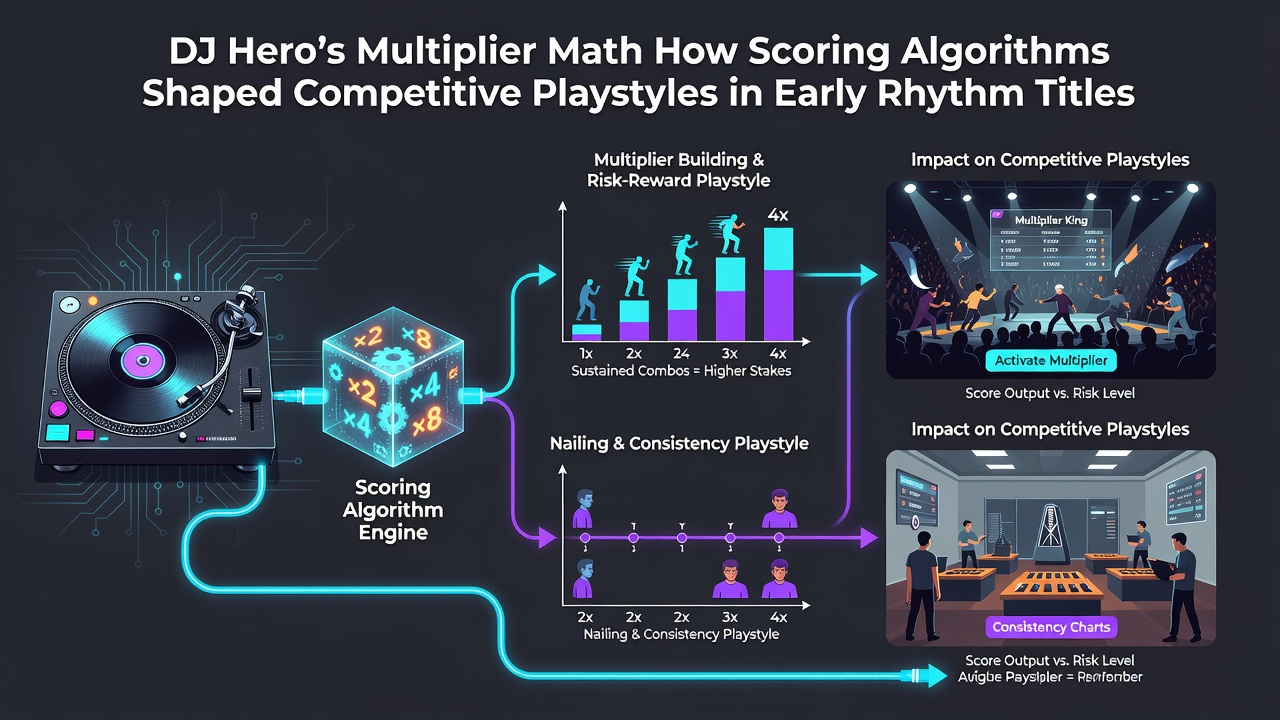
Further analysis of archived leaderboards demonstrates that the algorithm rewarded specific song pairings because certain mashups aligned high-density segments with automatic multiplier extensions, enabling sustained 3x or 4x phases across entire tracks. Those who studied these patterns learned to chain safe sections into high-risk payoffs, and this meta evolved rapidly once players shared spreadsheet breakdowns of exact reset points for each licensed track.
Long-Term Effects on Rhythm Game Design
Subsequent titles incorporated similar layered systems with added safeguards such as temporary shields that prevented single misses from fully resetting multipliers, a direct response to community feedback about DJ Hero's unforgiving decay rates. Industry reports compiled by the Canadian Interactive Digital Software Association in 2012 noted increased retention among competitive subsets when scoring models balanced risk and reward more evenly, and several developers cited DJ Hero's data as reference material during pre-production for later rhythm entries. The emphasis on streak maintenance also influenced hardware calibration standards, prompting controller manufacturers to refine latency tolerances in response to player complaints about inconsistent input registration that disproportionately affected multiplier stability.
Conclusion
Multiplier mathematics in DJ Hero established a template that shaped how rhythm game communities approached optimization, with algorithmic details dictating everything from song selection to practice routines in organized play. The interplay between streak requirements, meter fills, and decay mechanics created a competitive environment where precision and patience yielded measurable advantages, and those patterns persisted in modified forms across later releases in the genre.